
Google’s Orbital AI Data Centers Face Uncertain Timelines and Challenges
Four TPUs are now circling Earth inside a refrigerator-sized box, running AI in 15-minute bursts before they overheat. That’s the easy part of Google’s plan.
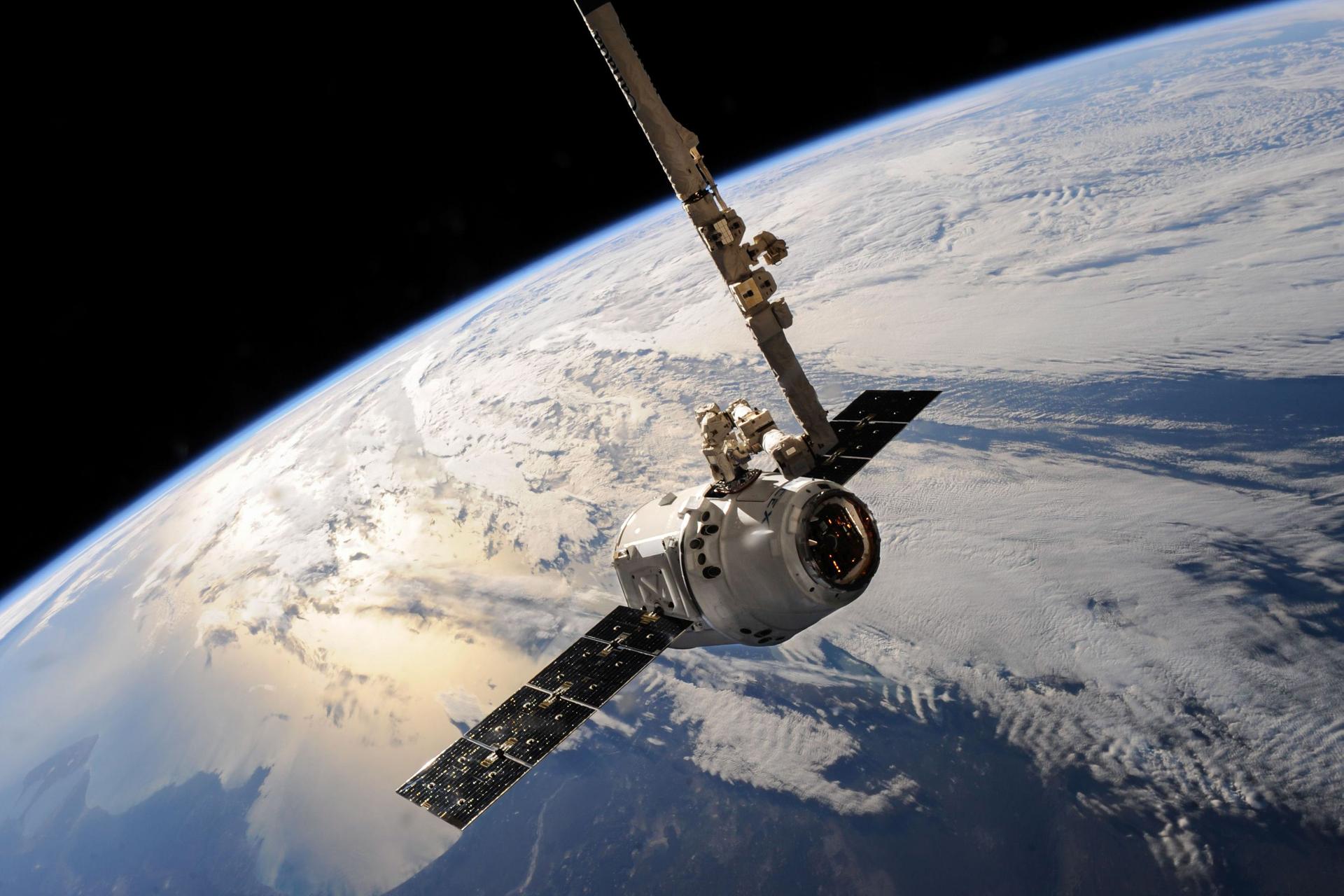
Google called the satellite MVP for a reason. On October 1, a Falcon 9 out of Vandenberg hoisted the Planet Labs-built spacecraft into a sun-synchronous orbit as part of the Transporter-18 rideshare. Inside sit four Trillium TPU chips, bolted to a flight-proven bus, sipping roughly one kilowatt from solar panels that see sunlight almost continuously. Contact came shortly after launch, and the hardware checked in as expected.
The goal over the next year is to run a version of Google’s open-weight Gemma model in short bursts while engineers watch the silicon degrade. If the box survives until next October without suffering a hard failure from radiation or thermal swings, Google will have logged the longest continuous run yet of general-purpose AI accelerators in space. That would be a genuine engineering win.
But a single satellite surviving for twelve months is a universe away from the constellation Google laid out in a recent peer-reviewed paper in the journal Joule. That paper envisions clusters of 81 satellites packed into a one-kilometer formation, talking to each other through optical links, effectively replicating a terrestrial data center in orbit. To get there, Google needs SpaceX to fly Starship about 1,800 times over ten years, orbital refueling to work, and launch costs to collapse to roughly $200 per kilogram. None of that is guaranteed. In fact, most of it is still firmly on the drawing board.
Synopsis
Google’s Project Suncatcher has placed four Trillium TPUs on a small satellite to test AI hardware under radiation, vacuum, thermal cycling and power constraints. The experiment could produce valuable engineering data, but its short inference bursts and limited spacecraft capacity cannot establish the economics, cooling, networking, reliability or launch cadence required for a cloud-scale orbital data center. For now, orbital AI is better understood as a serious qualification program with promising edge-computing applications and an uncertain commercial timetable.
The launch answers one narrow question
The current mission gives Google a chance to measure how its AI hardware behaves in space. Over the next year, the company plans to run a version of its open-weight Gemma model on the four TPUs. Each computing session should last roughly 15 minutes, based on the time available before heat becomes a serious problem.
That operating pattern says a great deal about the mission’s purpose. The satellite will demonstrate whether the chips can execute useful workloads, but it will produce limited computing capacity. Four TPUs running in short bursts have little connection to the thousands of accelerators used by a modern terrestrial AI cluster. Their value comes from the data they generate about the environment:
- How quickly does heat build up during a workload?
- How well do the chips perform after repeated thermal cycles?
- Does radiation corrupt memory or cause calculation errors?
- Can the spacecraft keep the processors within safe temperature limits?
- How much power reaches the chips after conversion and distribution losses?
A full year of operation would make the mission a meaningful engineering result. A failure would also be useful. A shutdown after several months could expose weaknesses in thermal design, radiation tolerance, power management, or software recovery. Google has called the spacecraft an MVP, or minimum viable product, because the company is testing the basic ingredients before committing to a larger constellation.
Betting the Farm on Someone Else’s Rocket
Google’s own researchers wrote the dependency into their paper with unusual candor. The economic model for orbital compute approaches terrestrial cost parity only if Starship reaches a cadence of roughly 180 launches per year, each hauling 200 metric tons, driving prices down toward $200 per kilogram by around 2035. That is not a small ask.
Starship has not yet demonstrated orbital refueling, a prerequisite for the heavy-lift profiles the plan assumes. The vehicle is still in early flight test phases, and while SpaceX’s V3 redesign promises up to 70 or more flights annually at roughly $100 per kilogram eventually, even that optimistic case falls short of the volume Google needs. The company would need to ramp from 70 to 180 flights per year while maintaining safety margins and regulatory approval across multiple launch sites. Then it would need to sustain that rhythm for a decade. The leap from prototype to production here is measured in thousands of successful flights, not dozens.
SpaceX gets there, or Google does not. The search giant has no rocket program of its own. It is effectively subcontracting the entire physical backbone of its space data center vision to a separate company with its own engineering priorities and customer backlog. If Starship hits delays, if orbital refueling proves trickier than expected, or if launch insurance costs spike after a failure, Google’s mid-2030s cost parity target drifts. The chips might survive space, but the spreadsheets stop working.
Heat, Radiation, and the 15-Minute Ceiling
Back on Earth, Google’s TPUs sit in climate-controlled halls with redundant cooling units and liquid loops. In orbit, the MVP satellite has vacuum. The Gemma model runs for roughly 15 minutes at a stretch before heat builds up to the point that chips risk damage. Engineers are using heat pipes and radiators to push thermal energy out into space, yet the limit remains.
Fifteen minutes of inference followed by cooldown cycles might prove that AI works in orbit. Doing so at scale is a different problem entirely. A real data center runs continuously. Google’s proposed 81-satellite cluster would need to manage heat across dozens of nodes simultaneously, with no atmosphere to carry excess energy away. Radiators work, but they add mass, complexity, and points of failure.
Then there is radiation. Google did the unglamorous work of proton-beam testing at UC Davis, and the Trillium chips held past 15 krad(Si) without catastrophic failure. The expected five-year mission dose is lower, around 750 rad(Si) for a shielded craft. Still, cumulative exposure causes gradual degradation. High-bandwidth memory showed irregularities after just 2 krad(Si). In a terrestrial data center, engineers swap a DIMM when it acts up. In orbit, a technician cannot schedule a house call. A single satellite might coast for a year, but maintaining performance across a fleet for five years requires either heroic radiation tolerance or heroic redundancy, both of which translate to more weight and more launches.
Hot Take
Orbital AI is not waiting for a better chip; it is waiting for an entire industrial stack to become routine.
A successful satellite test answers only whether selected hardware can operate in space. Commercial viability also requires affordable launches, repair or replacement strategies, thermal systems, high-throughput networking, traffic coordination and customers whose workloads justify the complexity.
The Math of Cost Parity
Google published its projections, and they sound precise. Orbital data centers skip land acquisition, cooling water, and local grid fights. They soak up roughly six to eight times more solar energy than equivalent Earthbound arrays because there are no clouds and almost no night in sun-synchronous orbit. The energy is essentially free after upfront capital.
The catch is that the upfront capital is astronomical. Launch costs today sit orders of magnitude above the $200 per kilogram threshold. Even with rideshare bargains like Transporter-18, hoisting a refrigerator-sized satellite plus the mass of radiators, shielding, and solar panels is expensive. Building a constellation of thousands of nodes to handle real AI workloads would require more mass than every commercial rideshare mission to date combined.
Analysts at BCG and JLL have noted that orbital data centers could become feasible, but the timeline and the workload type matter enormously. AI training, which demands massive data throughput and low latency to storage, looks like a poor fit for orbital links. Inference workloads such as Gemma are more tolerable, yet still require reliable bandwidth back to Earth. Optical inter-satellite links can help node-to-node chatter, but the downlink to ground stations introduces latency and costs that terrestrial fiber does not face. The honest assessment in the industry’s own literature is that space-based infrastructure will likely coexist with Earthbound facilities rather than replace them, and that coexistence might persist for decades, not years.
What the prototype can actually prove
The first satellite can produce valuable answers, but its results should be judged against specific milestones rather than the full Suncatcher vision. The most important tests include:
- One year of operation: Continued performance would show that the hardware and spacecraft can survive an extended mission.
- Thermal performance: Engineers need to measure real heat buildup, cooling times, and the effects of repeated workload cycles.
- Radiation behavior: The mission can reveal whether laboratory tests accurately predict memory errors and processor reliability.
- Power margins: The team can compare available solar power with the needs of the TPUs and spacecraft systems.
- Software recovery: Fault detection and recovery will matter when human access is impossible.
- Useful output: Running Gemma successfully will show that the system can complete a workload, even if it says little about large-scale training economics.
These results could justify the two-satellite test planned for 2027. They will not settle the launch cost question, the maintenance problem, or the economics of an 81-satellite cluster.
Back on the Ground, the World Keeps Spinning
While Google chases orbit, terrestrial data center operators are not standing still. Nuclear microreactors are drawing serious investment from firms looking to isolate AI power from strained grids. Utility companies are upgrading transmission capacity in places like Texas and Arizona. Chipmakers are squeezing more performance per watt out of every generation. The AI power crunch is real, but so is the incentive to solve it on familiar ground.
NVIDIA has already entered the orbital compute conversation with its Space-1 Vera Rubin Module, suggesting the sector has competitive interest. Yet even NVIDIA frames its orbital offering as a specialized edge play for specific space-based inferencing, not a wholesale replacement for cloud regions in Ohio or Singapore. Google appears to be making a bigger bet, and a bigger bet carries bigger execution risk.
If Starship achieves its cost targets and launch cadence by the mid-2030s, Google looks prescient. If Starship stumbles, or if terrestrial energy solutions mature faster, Project Suncatcher risks becoming an expensive demonstration project that solved the wrong bottleneck. The power problem might yield to a new gas turbine, a small modular reactor, or simply a more efficient TPU. Google’s orbital escape route only wins if every Earthbound alternative stalls simultaneously.
Frequently Asked Questions
What did Google launch into orbit for Project Suncatcher?
What is Google testing with the four TPUs?
What can this first mission actually prove about orbital AI data centers?
Why is cooling a major challenge for AI hardware in space?
Does the radiation testing show that the TPUs are reliable for long-term use?
How would satellites in an orbital AI cluster communicate?
What assumptions make orbital AI data centers economically uncertain?
What are the most credible near-term uses for AI in orbit?
Sources
- Npr – Google launches Project Suncatcher, a step towards AI data centers in space
- Blog – Behind Project Suncatcher, our moonshot to put AI in space
- Scientificamerican – Google tests its plan for AI data centers in space with four AI processors
- Exterrajsc – Starship V3’s First Flight Rewrites the Commercial Launch Cost Equation
- Spacex – SpaceX – Updates
- Bcg – Space-Based Data Centers: Cost and Outlook to 2040
- Jll – Data centers in space
- Mdpi – Reliability and Risk in Space-Based Data Centers
- www2.itif.org – Policy Considerations for Orbital Data Centers
- Brookings – Orbital data centers’ feasibility gap is a governance risk
- Bisresearch – In-Orbit Data Centers Market – Global and Regional Analysis
- Facebook – With attention on orbital data centers, the focus turns to economics
- Researchgate – Reliability and Risk in Space-Based Data Centers: A Lifecycle Assessment of Orbital Cloud Infrastructure
- en.wikipedia.org – Space-based data center
- Youtube – Why Space-Based AI Data Centers Are Inevitable: 3 Levels of Analysis




