OpenAI and Anthropic Explore Smaller Data Center Deals
After signing multi-billion dollar agreements for massive compute infrastructure, the AI giants are now hunting for quicker-to-deploy capacity in the 20-30MW range. But this diversification strategy doesn’t change the underlying reality that training frontier models still demands gigawatt-scale facilities.
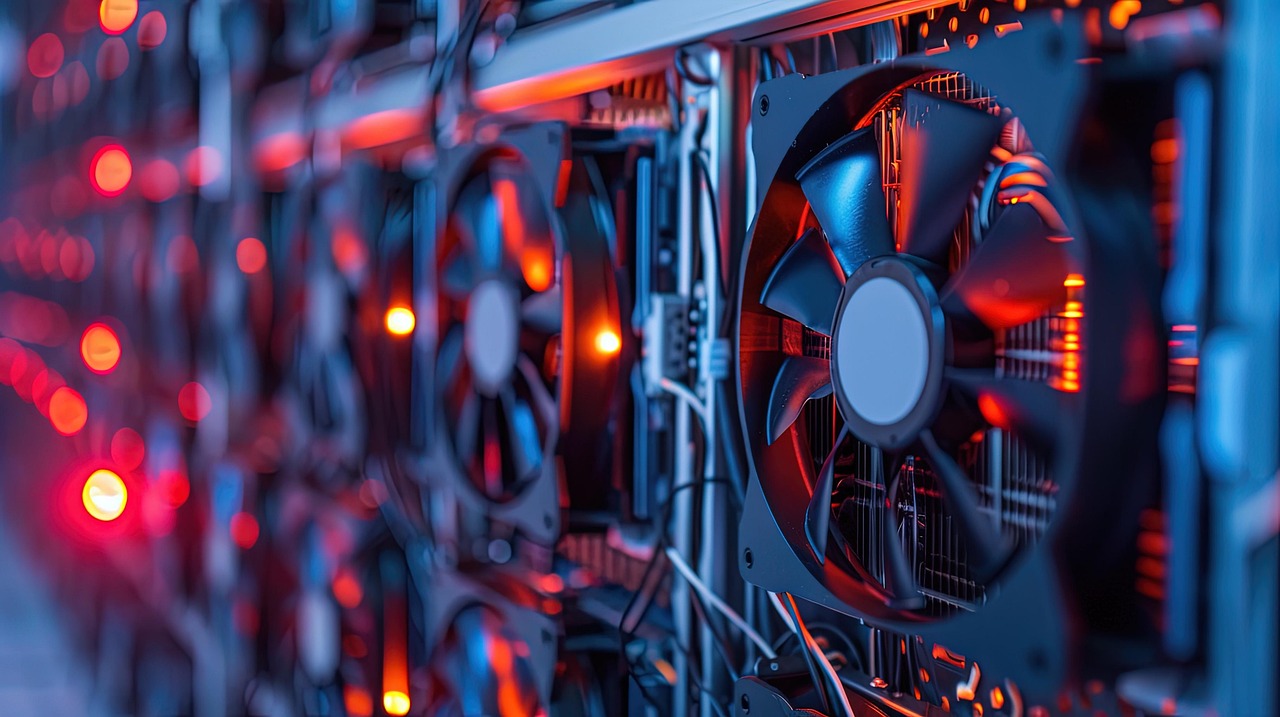
OpenAI and Anthropic are having conversations with data center operators about deals in the 20-30MW range, according to recent reports. OpenAI has discussed these arrangements with providers in the United States and the Nordic region, while Anthropic has explored similar options in the UK and Nordics. These deals mark a shift toward smaller, more distributed infrastructure alongside the huge training clusters both companies have already committed billions to secure.
“We’re building a diversified compute portfolio to meet growing demand for AI around the world,” OpenAI said in a statement. The company explained that different workloads require different infrastructure, leading them to evaluate partners based on performance, reliability, timing, and cost. They declined to comment on specific commercial discussions.
Anthhropic has signed at least $517 billion in compute capacity leases over the past 11 months, expanding its ability to both train and serve its Claude models. That figure represents a massive acceleration from earlier projections and signals just how much infrastructure these AI labs think they’ll need.
The Scale of Recent Commitments
To understand why smaller deals matter, it helps to see what these companies have already locked in. Since October of last year, Anthropic has signed agreements for 14.8 gigawatts of compute capacity that will come online over the next few years. The company previously told investors it expected to spend around $180 billion renting servers through 2029, but recent analysis suggests that number has climbed to $517 billion.
Anthhropic inked a roughly $45 billion cloud deal with Nscale for around 460 MW of compute capacity at a data center development in West Virginia. The company also agreed to rent all the computing capacity at SpaceX’s Colossus 1 data center, which amounts to more than 300 megawatts of AI compute using over 220,000 Nvidia GPUs. Additional capacity from Colossus 1 and agreements with Amazon, Google, Microsoft, and Nvidia will enable Anthropic to increase what it can offer Claude Pro and Claude Max subscribers.
OpenAI hasn’t been sitting still either. The company surpassed its original 10 GW commitment to the Stargate AI infrastructure project in April and has since committed to developing an additional 3 GW in Georgia and 8 GW in Ohio. The company’s compute strategy now includes partnerships with AWS, AMD, Broadcom, Cerebras, CoreWeave, Oracle, SB Energy, and SoftBank. OpenAI signed a multi-year agreement with Cerebras Systems worth over $10 billion to deploy 750 megawatts of wafer-scale AI compute dedicated to inference workloads.
These aren’t minor side bets. A typical one-gigawatt AI data center requires $38 billion in up-front capital expenditure and $0.9 billion in annual operating expenses. The scale of investment shows that both companies believe frontier AI development demands massive centralized infrastructure.
Synopsis
OpenAI and Anthropic are reportedly pursuing 20–30MW data center deals in the United States, UK, and Nordic region alongside their multibillion-dollar commitments to gigawatt-scale facilities. The smaller sites can be deployed more quickly and located closer to users for inference, but they do not change the fundamental requirement for massive centralized clusters to train increasingly capable frontier models.
Why Smaller Deals Matter Now
So why pursue 20-30MW deals when you’ve already committed hundreds of billions to gigawatt-scale facilities? The answer comes down to different workloads and deployment timelines.
Training large language models requires enormous clusters of GPUs working in parallel for months at a time. That’s where the gigawatt-scale commitments come in. But once a model is trained, serving it to users (called inference) has different requirements. Inference workloads benefit from geographic distribution, lower latency, and faster deployment cycles.
According to research from real estate company JLL, the proportion of total data center capacity used for inference workloads is expected to overtake training workloads in 2027. That shift explains why both companies are looking at smaller, more distributed capacity now. They need infrastructure that can come online quickly in markets where their users are concentrated.
OpenAI’s statement about building a “diversified compute portfolio” reflects this reality. The company actively manages its portfolio for both capability and economics, using premium systems where capability matters most and optimizing for efficiency where scale and cost become the bigger factors. Different architectures serve different purposes: Nvidia GPUs for training, custom Broadcom chips for efficiency, Cerebras for latency-sensitive inference like code generation and real-time voice.
But here’s where the devil’s advocate perspective matters. These smaller deals don’t represent a fundamental change in how AI labs operate. They’re a tactical addition to a strategy that still revolves around massive centralized power.
The Limits of Diversification
Calling this a “diversified” strategy makes it sound like AI labs are exploring genuine alternatives to centralized compute. They aren’t. The 20-30MW deals are supplements, not substitutes. The core capability that differentiates these companies (training increasingly capable models) still requires the kind of infrastructure that only gigawatt-scale facilities can provide.
Consider what Anthropic and OpenAI have actually committed to. Anthropic’s $517 billion in compute leases over 11 months dwarfs the value of a few dozen 20-30MW deals. OpenAI’s partnerships span multiple gigawatt-scale projects across several states. The smaller deals represent maybe 5-10% of their total infrastructure footprint, if that.
The industry’s direction confirms this. Alphabet, Amazon, Microsoft, and Meta are expected to spend more than $350 billion this year on data centers and $400 billion in 2026. McKinsey research shows that AI-related data center infrastructure will need $5.2 trillion by 2030. The exponential expansion of global AI investment continues at scale, with hyperscalers on track to spend $625 billion in 2026 alone.
This spending doesn’t suggest an industry moving away from centralized infrastructure. It shows an industry doubling down on it.
Our Perspective
The smaller deals are best understood as an operational layer, not a strategic retreat from mega-scale infrastructure. OpenAI and Anthropic need distributed capacity to serve growing demand efficiently while their largest facilities are built, but the core competitive advantage still comes from access to enormous, centralized training clusters. In practice, diversification makes the infrastructure race more complex and capital-intensive rather than making it smaller.
Training vs. Inference: A Real But Limited Distinction
The shift toward inference workloads is real and does create demand for distributed infrastructure. But it doesn’t eliminate the need for massive training clusters. If anything, it adds a new category of infrastructure spending on top of what’s already required.
AI labs need both. They need gigawatt-scale facilities to train the next generation of models, and they need distributed capacity to serve those models efficiently once trained. The smaller deals support the second requirement without reducing the first.
Some analysts have suggested that inference-optimized hardware could eventually reduce the dominance of training infrastructure. Cerebras, for example, offers wafer-scale engines designed specifically for inference workloads. OpenAI’s partnership with Cerebras for 750 MW of inference-dedicated compute shows there’s appetite for specialized solutions.
But specialized inference hardware doesn’t change the fundamental economics of model development. Training GPT-5 or Claude 4 will require even more compute than their predecessors. The scaling laws that have driven AI progress so far show no signs of breaking down. Each new generation of models requires roughly 10 times the compute of the previous generation to achieve meaningful capability improvements.
That means the training clusters keep getting bigger, not smaller. And those clusters need to be centralized because training requires high-bandwidth, low-latency communication between thousands of GPUs running synchronized calculations. You can’t distribute that workload across dozens of small data centers. The physics don’t work.
Energy and Geographic Constraints
The focus on smaller deals in specific regions (US, UK, Nordics) also reveals constraints rather than choices. These are regions where both energy and regulatory environments make data center development feasible. The Nordic countries, in particular, offer cheap renewable energy and cool climates that reduce cooling costs.
But the fact that AI labs are hunting for 20-30MW capacity in these specific markets doesn’t mean they’ve found a way to escape energy constraints. It means they’re trying to squeeze capacity out of markets that can support incremental deployments while their gigawatt-scale facilities are still under construction.
Building a one-gigawatt data center takes years. Permitting, construction, grid connections, and equipment procurement all have long lead times. Smaller deals let AI labs add capacity more quickly while they wait for the big projects to come online. That’s practical planning, but it doesn’t represent a strategic shift.
The energy requirements alone show why centralization will continue to dominate. AI could be responsible for 50% to 70% of total data center computing by 2030, according to projections from Bain & Company and McKinsey. Meeting that demand requires access to large amounts of reliable power. Small distributed facilities can’t provide the kind of baseload capacity that training workloads need.
Glossary
- AI data center — A facility equipped to train, deploy, and serve artificial intelligence models.
- Compute capacity — The processing resources available for workloads, often measured by power, GPUs, or infrastructure scale.
- Distributed inference — Serving model responses from multiple geographic locations to improve latency, reliability, or capacity.
- Frontier model — A highly capable AI model at the leading edge of performance and scale.
- Gigawatt-scale facility — A data center or campus designed to support roughly a gigawatt of electrical capacity.
- Inference — The process of running a trained model to generate responses or predictions.
- Training — The process of using data and computation to develop a model’s capabilities.
- Wafer-scale engine — A large processor built across much or all of a semiconductor wafer, designed to accelerate certain AI workloads.
What This Means for the Industry
The fact that OpenAI and Anthropic are pursuing smaller data center deals tells us something about their growth expectations. They think demand for their services will continue expanding rapidly enough to justify billions in additional infrastructure spending. They’re preparing for a world where millions of developers and hundreds of millions of end users are making API calls to their models every day.
That preparation requires distributed infrastructure for latency and reliability reasons. But it doesn’t change the centralized nature of model development itself. The companies that can afford to build and operate gigawatt-scale training clusters will continue to have a fundamental advantage in developing the most capable models.
Smaller AI labs and open-source projects can’t compete at that scale. They’re already priced out of frontier model development. The capital requirements have grown so large that only companies backed by tech giants or sovereign wealth funds can participate. Anthropic has backing from Google, Amazon, and others. OpenAI has Microsoft’s support and has raised additional billions from investors.
The smaller deals these companies are pursuing don’t make the market more accessible to competitors. If anything, they show how AI labs are building multi-layered infrastructure strategies that require even more capital and operational sophistication. A company needs to manage relationships with dozens of data center providers across multiple continents, optimize workload placement across different types of hardware, and coordinate capacity planning years in advance.
The Bigger Picture
When OpenAI says it’s building a “diversified compute portfolio,” that’s accurate but incomplete. The diversification happens within a model that still depends on massive centralized infrastructure. The 20-30MW deals are nodes in a network, but the network’s intelligence and capability comes from the gigawatt-scale training facilities at its core.
This doesn’t make the smaller deals unimportant. They matter for latency, reliability, geographic coverage, and deployment speed. But they don’t represent a paradigm shift in how AI gets built and deployed. They’re an operational refinement of the existing paradigm, which revolves around training ever-larger models using ever-larger clusters of specialized hardware.
The industry’s trajectory remains clear. More investment in larger facilities, with tactical additions of smaller distributed capacity to support specific workloads. The $7 trillion race to scale data centers that analysts have described isn’t slowing down. It’s accelerating, with both training and inference workloads driving demand.
For anyone following the AI industry, the smaller data center deals that OpenAI and Anthropic are pursuing offer a window into their operational challenges and growth expectations. But they don’t change the fundamental economics of frontier AI development. That still requires the kind of infrastructure that only a handful of companies can afford to build and operate. The smaller deals supplement that capability rather than replacing it.
Frequently Asked Questions
What size data center deals are OpenAI and Anthropic exploring?
Why are OpenAI and Anthropic pursuing smaller data center deployments?
How do these smaller deals fit into the companies’ broader infrastructure strategies?
What major computing commitments has Anthropic made?
What major infrastructure commitments has OpenAI made?
How do training and inference workloads differ?
Why can’t smaller data centers replace large training facilities?
What do the smaller deals indicate about the AI infrastructure market?
Sources
- CNBC — Anthropic, OpenAI hunt for smaller AI data center deals as race for compute ramps up
- Data Center Dynamics — Anthropic signed $517bn in compute agreements in past 11 months
- OpenAI — The full stack behind abundant intelligence
- McKinsey — The cost of compute: A $7 trillion race to scale data centers
- Epoch AI — Total cost of ownership of a one-gigawatt AI data center
- IBM — What Is an AI Data Center?