Transforming Lunar Data Into Groundbreaking Discoveries for Exploration
Decades of lunar observations have generated petabytes of data, but transforming those complex, multi-instrument observations into actionable scientific insights has remained a challenge – until now.
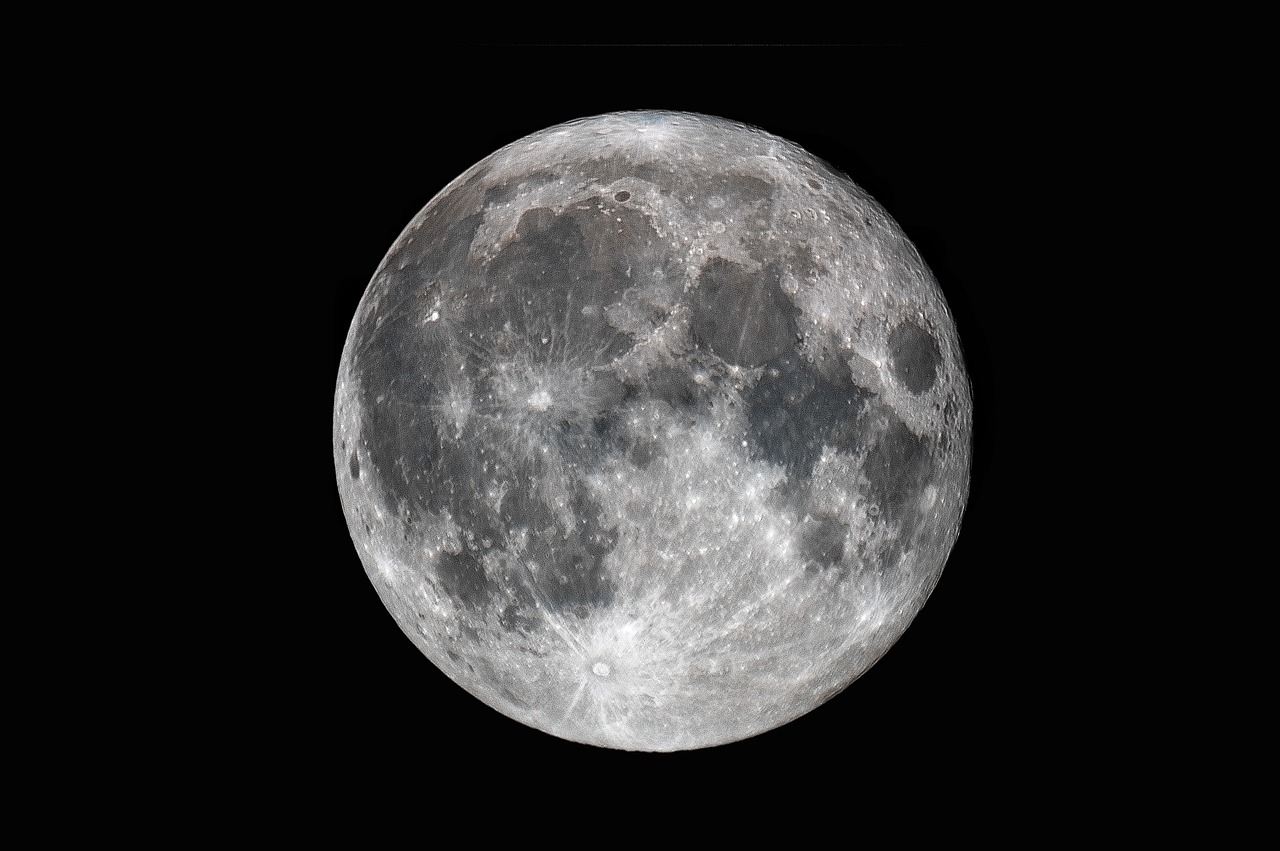
IBM and NASA have jointly released the NASA-IBM Lunar Foundation Model, marking a pivotal advancement in how scientists study the Moon. This open-source artificial intelligence system represents one of the first publicly available foundation models specifically designed for lunar scientific exploration. Trained on an extensive dataset curated by researchers from both organizations, the model has the potential to revolutionize humanity’s approach to establishing a sustained presence on Earth’s closest celestial neighbor. By connecting observations across instruments and revealing patterns difficult to discern in isolation, this AI breakthrough provides researchers with an unprecedented tool for analyzing the Moon at scale.
The Challenge of Lunar Data Analysis
The Moon’s surface tells a complex story written over billions of years. Craters mark ancient impacts, ice deposits hint at potential resources, and volcanic features reveal thermal history. For decades, sensors and instruments have continuously observed the lunar surface, accumulating petabytes of information from multiple missions. However, this wealth of data has presented scientists with a significant challenge: how to efficiently analyze and extract meaningful insights from such vast, diverse datasets.
Traditionally, researchers have relied on two primary approaches. The first involves manually sifting through maps and images, a time-consuming process that requires extensive human effort. The second utilizes low-resolution, task-specific machine learning models designed for individual purposes. Both methods have significant limitations. Manual analysis is computationally intensive and cannot scale to handle the enormous volume of available data. Meanwhile, existing machine learning models often lack the scientific accuracy needed to identify and analyze geographic features with precision, and they typically cannot integrate multiple types of observations or resolutions.
The NASA-IBM Lunar Foundation Model addresses these fundamental limitations by providing a unified framework capable of processing multi-modal, multi-resolution data. Rather than building separate algorithmic systems for every scientific question, researchers can now start from a shared foundation model and adapt it to specific tasks, dramatically accelerating the pace of discovery.
Synopsis
NASA and IBM’s open-source Lunar Foundation Model turns decades of fragmented lunar observations into a shared, adaptable system for scientific analysis. By connecting imagery, topography, gravity, composition and other data at multiple resolutions, it can help researchers locate potential ice, map volcanic features, improve crater inventories and assess landing regions more efficiently. Its predictions will not replace spacecraft measurements or engineering review, but they could make lunar discovery and exploration planning faster, more integrated and more accessible.
A Unified Dataset for the Lunar Science Community
One of the most significant contributions of this collaboration extends beyond the model itself: the creation of the first open-source, unified lunar dataset of its kind. Despite the abundance of lunar observations collected over decades, no publicly available dataset previously existed that brought multi-modal, multi-resolution data into a common framework suitable for modern machine learning applications.
The IBM and NASA research teams constructed a comprehensive dataset aggregating over 30 spatially-aligned layers from nine instruments across four missions. This remarkable compilation combines tens of thousands of images and maps showing unique geophysical properties of the lunar surface. Data sources include NASA’s Lunar Reconnaissance Orbiter (LRO), which has conducted over 17 years of continuous observations, NASA’s GRAIL mission, and complementary information from the Japanese Aerospace Exploration Agency’s SELENE/Kaguya mission. Together, these datasets provide a rich, multi-dimensional view of both the lunar surface and subsurface, now available for the entire scientific community to build upon.
This unified, machine learning-ready dataset represents a foundational resource that will enable researchers worldwide to conduct investigations that were previously impossible. By standardizing data from multiple sources into a coherent framework, the dataset eliminates many technical barriers that have historically slowed lunar research.
Locating Lunar Ice: A Critical Resource for Future Missions
Among the model’s most compelling applications is its ability to predict locations of potential lunar ice deposits. Permanently shadowed regions near the lunar poles represent some of the Moon’s most challenging environments to observe. Sunlight never reaches the floors of these deep craters, creating conditions where temperatures remain perpetually frigid. Scientists believe these areas may harbor lunar ice beneath the surface – a discovery of immense significance for future exploration.
Lunar ice indicates the presence of water and oxygen, resources considered absolutely essential for establishing a sustainable Moon base and producing rocket fuel for future missions to Mars. The ability to access water on the Moon would dramatically reduce the cost and complexity of long-duration missions by eliminating the need to transport these heavy resources from Earth.
The NASA-IBM model demonstrates remarkable performance in this critical application. By combining multimodal and multi-resolution observations, it predicts where ice may be present on the lunar surface with substantially greater accuracy than previous approaches. According to technical papers authored by NASA-IBM researchers, the model reduced error (RMSE) in identifying areas with high potential for lunar ice by up to 22% compared to the SwinV2-B (ImageNet) model, a state-of-the-art baseline.
Recent research from the University of Hawaii suggests that while surface ice in permanently shaded regions may be less abundant than initially believed, advanced detection capabilities remain crucial for accurately assessing ice distribution and concentration. The NASA-IBM model’s sophisticated multi-modal approach positions it as precisely the kind of advanced technology needed to support future missions targeting these valuable resources.
Hot Take
The next lunar breakthrough may come not from a new instrument, but from connecting the instruments we already have.
The Moon has accumulated an enormous scientific record, yet much of its potential remains divided across formats, missions and specialized workflows. A shared AI model could expose relationships that are difficult to see when each dataset is analyzed separately.
Understanding Lunar Volcanic History
The model also enables groundbreaking research into the Moon’s volcanic past. Scientists study features called Irregular Mare Patches (IMPs) to better understand the Moon’s volcanic history and thermal evolution. These distinctive geological formations provide clues about when and how volcanic activity shaped the lunar surface over billions of years.
Recent discoveries have fundamentally challenged previous assumptions about lunar volcanism. Analysis of samples returned by China’s Chang’e 5 mission revealed glass beads of volcanic origin dated to just 120 million years ago – evidence that the Moon remained volcanically active far more recently than the billion-year timeframe scientists previously accepted. This finding has profound implications for understanding the thermal evolution of the Moon and rocky planets in general.
Researchers from Purdue University have used gravity measurements to discover previously undetected deposits of volcanic material buried beneath the lunar surface. Their work revealed that a higher volume of volcanic rocks exists in the lunar crust than previously proposed, indicating that greater volumes of lava erupted during early lunar history than scientists had estimated.
The NASA-IBM Lunar Foundation Model contributes to this evolving understanding by identifying volcanic features with greater accuracy and efficiency. Using imperfect labels, the model captures the extent of volcanic features 3% better than the SwinV2-B (ImageNet) baseline, achieving comparable accuracy with significantly greater efficiency and lower fine-tuning costs. Identifying these changing regions is also strategic for future surface operations, helping mission planners select appropriate landing sites and establish long-term infrastructure.
Crater Detection and Landing Site Selection
Craters represent one of the Moon’s most important and distinguishing features. These impact scars reveal crucial information about lunar history, including the age of different terrains, their geology, and the chemical composition of the early lunar interior. For practical exploration purposes, crater mapping helps NASA select safe landing sites, avoid hazards such as steep slopes and boulders, and plan locations for long-term lunar infrastructure.
The NASA-IBM model demonstrates impressive capabilities in crater detection across multiple scales. At meter-scale resolution, researchers can now identify, contextualize, and classify craters with accuracy comparable to state-of-the-art models like SwinV2-B, while offering greater efficiency and substantially lower fine-tuning costs. The computational savings represent a significant practical advantage, making advanced crater analysis accessible to more research teams with limited resources.
At context-scale resolution (approximately 100 meters), the model’s performance becomes even more remarkable. It outperforms SwinV2-B by nearly 19% while using only half the training data. This efficiency demonstrates the power of foundation models trained on domain-specific data, which can achieve superior results compared to general-purpose models adapted to specialized tasks.
As NASA prepares for the Artemis program to return humans to the Moon, with particular focus on the resource-rich south polar region, accurate crater mapping becomes increasingly critical. The ability to rapidly and accurately assess terrain features will directly support mission planning and astronaut safety.
The Formula
Multimodal Data
+
Foundation Model
+
Expert Validation
=
Exploration Insight
- Connecting diverse lunar observations with adaptable AI and scientific review produces faster, better-grounded hypotheses for exploration.
Part of a Broader Vision for Scientific Discovery
The NASA-IBM Lunar Foundation Model extends an established collaboration between the two organizations focused on transforming valuable scientific data into openly available foundations for discovery. By open-sourcing the model, IBM and NASA ensure that scientists and researchers worldwide have access to cutting-edge AI systems that can accelerate progress in lunar exploration.
This lunar model joins the Prithvi family of open foundation models developed through the NASA-IBM partnership, which now spans geospatial analysis, weather prediction, heliophysics, and lunar science. Together, these models advance a broader vision: rather than building new algorithmic systems from scratch for every scientific question, researchers can start from shared foundation models and adapt them to new tasks, dramatically accelerating discovery across domains.
“NASA has spent decades building an extraordinary scientific record of the Moon, but collecting data is only part of the job,” said Kevin Murphy, chief science data officer and acting chief data and AI officer at NASA Headquarters in Washington. “We also have to make data easier for scientists to explore and use. The NASA-IBM Lunar Foundation Model shows what’s possible when we bring AI to NASA’s petabytes of scientific data. That’s a real opportunity we see with AI: turning large-scale data into new discoveries.”
Juan Bernabe-Moreno, Director of IBM Research Europe, UK and Ireland, emphasized the model’s transformative potential: “Uncovering the mysteries of the Moon requires an ability to learn from an extraordinary volume of scientific data. The NASA-IBM Lunar Foundation Model gives scientists a foundation to explore the Moon at scale, connecting observations across instruments, revealing patterns that are difficult to see in isolation, and providing an open platform the global research community can build on.”
Accelerating the Path to Sustained Lunar Presence
The release of the NASA-IBM Lunar Foundation Model represents more than just a technological achievement – it embodies a fundamental shift in how humanity approaches lunar exploration. By democratizing access to sophisticated AI tools specifically designed for lunar science, this initiative empowers researchers worldwide to contribute to our understanding of the Moon.
The model’s open-source nature ensures that scientific progress will not be limited to well-funded institutions or government agencies. Graduate students, international research teams, and scientists in developing nations can now access the same powerful analytical capabilities, fostering a truly global collaborative effort to unlock the Moon’s secrets.
As space agencies prepare for increasingly ambitious lunar missions, including the establishment of permanent bases and the use of lunar resources to support deep space exploration, the ability to rapidly analyze terrain, locate resources, and understand geological history becomes increasingly critical. The NASA-IBM model provides an essential tool for mission planning, resource prospecting, and scientific investigation.
The Moon, once thought to be a geologically dead world, continues to surprise researchers with evidence of recent volcanic activity, hidden ice deposits, and complex thermal evolution. With the NASA-IBM Lunar Foundation Model, scientists now have an unprecedented capability to transform decades of observational data into actionable insights. This AI-powered approach to lunar science accelerates humanity’s quest not just to visit the Moon, but to establish a sustained presence that will serve as a stepping stone for exploration throughout the solar system.
The foundation has been laid. The data has been unified. The model has been released. Now, the global scientific community stands ready to transform lunar exploration through the power of artificial intelligence, turning observations into discoveries and data into the roadmap for humanity’s future beyond Earth.
Frequently Asked Questions
What is the NASA IBM Lunar Foundation Model?
Why is this model important for lunar research?
How could the model help locate water ice on the Moon?
How can the model improve the study of lunar volcanism?
Can the model improve crater mapping and landing-site selection?
What does the open-source release make possible?
Will the AI choose lunar base locations or prove that ice exists?
How could the model support future lunar exploration?
Sources
- NASA — NASA, IBM Launch AI Foundation Model for Lunar Science
- IBM Research — A Rough Guide for Going Back to the Moon
- NASA — Moon Water and Ices
- University of Hawaiʻi — Moon’s Darkest Craters Hold Less Surface Ice Than Scientists Thought
- University of Maryland — Scientists Use Moonquakes to Locate Lunar Ice
- Purdue University — Purdue Scientists Discover Volcanic Material on the Moon Hidden Beneath the Surface
- UC Davis — Recent Volcanoes on the Moon?
- USRA — USRA Contributes Planetary Science Expertise to NASA-IBM Lunar Foundation Model
- Hugging Face — NASA-IBM Lunar Foundation Model