
Singapore Enforces Laws Against AI Misinformation to Safeguard Public Safety
One fake photo shut down a 435-acre reservoir, scrambled water sports schedules, and pulled government teams into a days-long search. Singapore’s response shows exactly why the city-state treats AI-generated misinformation as a serious threat to public order.
When Ye Lin, a 30-year-old worker, used Google Gemini to whip up a photo of a saltwater crocodile lurking in Singapore’s Pandan Reservoir, he likely expected nothing more than a laugh. He sent the image to a colleague in August 2026, and somehow it rattled through enough channels to reach the Public Utilities Board, Singapore’s national water agency. Within hours, officials treated the sighting as real. They suspended all water activities, alerted the Singapore Canoe Federation and the Singapore Rowing Association, and sent staff to trawl the 435-acre basin for a predator that never existed. After roughly two days of searching, authorities determined the photo was pure AI slop. Ye now faces criminal charges carrying years in prison. The case serves as a blunt reminder that in Singapore, generating a fake image and letting it circulate qualifies as a serious offense with tangible consequences. The city-state’s stringent laws against false messages exist because the downstream costs hit real budgets, real schedules, and real public safety systems.
A Joke That Ate Public Resources
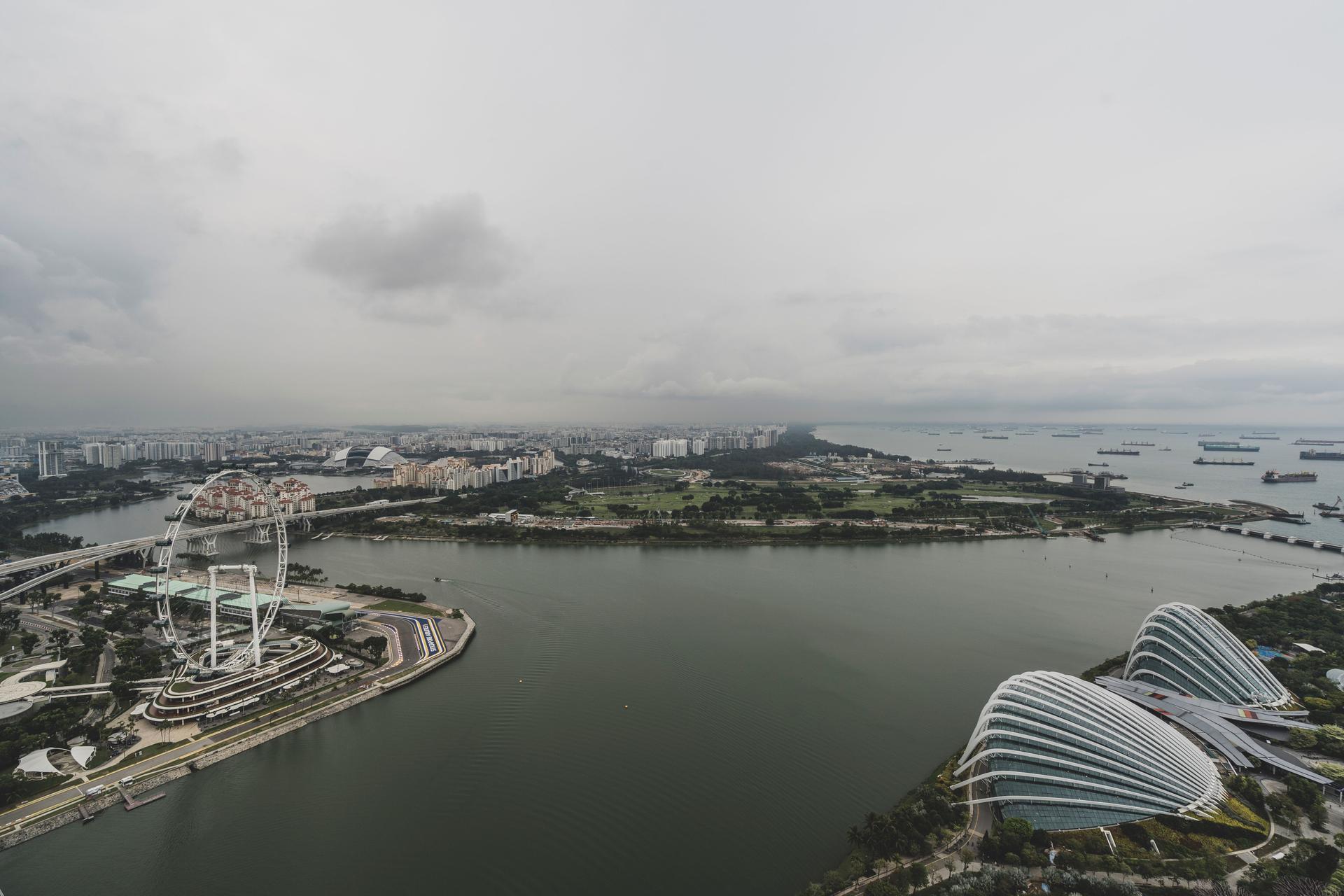
Pandan Reservoir sits in Singapore’s western residential district, spanning roughly 435 acres. For perspective, Central Park Reservoir in New York covers only 106 acres. The basin isn’t decorative scenery. It serves as a working hub for paddlers, rowers, and recreational users who rely on steady access to the water. When Ye’s image reached PUB officials on August 20, they had to act on the possibility of a lethal saltwater crocodile in a space used by athletes and families. They suspended water activities immediately. The Singapore Canoe Federation and the Singapore Rowing Association halted operations. National park staff joined water agency teams in physically searching the reservoir.
This demanded the full response of an operational emergency. Transporting search teams, coordinating across agencies, and notifying every group that uses the reservoir takes time, fuel, and payroll. The reservoir remained closed until August 22, when PUB finally confirmed the photo was fabricated and filed a police report. Ye’s decision to hit send on an AI-generated picture triggered a cascade that pulled public servants away from actual duties.
Police addressed the point directly in a statement. They noted that falsehoods cause fear and inconvenience to the public, and they force the unnecessary deployment of resources. In a city-state of under six million people, public agencies run lean. Diverting water officials and park staff for two days amounts to a serious reallocation. Those hours can’t be recovered. Every search boat on the reservoir pulled capacity away from routine operations. That resource drain forms the core argument for Singapore’s strict stance. The law treats these incidents as serious offenses because the costs land squarely on taxpayers and on the sports clubs whose schedules got shredded.
Synopsis
Singapore’s prosecution of a man accused of sending an AI-generated crocodile image shows how synthetic media can turn a private joke into a public-safety incident. The fabricated sighting prompted a reservoir search, suspended water activities, and consumed agency resources, illustrating why deliberate false reports may justify criminal consequences. The case also highlights the need to distinguish harmful deception from criticism, satire, or honest error while maintaining safeguards against overbroad misinformation enforcement.
The Charges Stack Up
Authorities arrested Ye and charged him under Singapore’s laws against transmitting false messages. The offense carries a maximum of three years in prison and a fine around $8,000. The penalty is severe because the harm involves emergency response hours, closed facilities, and public alarm. Ye also earned an additional charge for obstruction of justice. According to reports, he deleted the image and app logs from his phone. That scrubbing signals consciousness of guilt, and prosecutors pile on extra exposure for defendants who try to hide evidence.
Ye has indicated he plans to plead guilty. His next court appearance is slated for November 10, 2026. Pleading guilty may reduce his sentence, yet the core fact remains: a single AI image forced an agency-wide mobilization.
The obstruction charge matters beyond the added prison exposure. It shows the court system differentiates between making a mistake and covering it up. Deleting files after learning of an investigation reflects an attempt to control the narrative. Singapore’s legal framework punishes both the original falsehood and the subsequent cleanup because both actions waste public resources. The false message charge handles the lie itself. The obstruction charge handles the attempt to frustrate the investigation. Together, they reflect a system that treats the full chain of misconduct seriously.
Singapore maintains a dense web of laws addressing digital falsehoods. The Protection from Online Falsehoods and Manipulation Act, known as POFMA, has been active since 2019. It empowers ministers to issue correction directions and imposes stiff fines on anyone knowingly communicating falsehoods prejudicial to public interest. While Ye Lin’s specific charge falls under a distinct provision targeting false messages, it operates within the same philosophy. The state refuses to treat viral misinformation as a regulatory gray area. It assigns criminal liability to the person who hits send. That clarity removes ambiguity. Transmitting a false statement that triggers public action invites criminal liability.
AI Slop and the Fog of Information
Ye’s crocodile photo represents a specific category of modern content: AI slop. The term describes low-effort, machine-generated images, text, and video that flood platforms and group chats. Google Gemini produced the crocodile image in seconds. It looked plausible enough to pass through casual inspection. The incident arrived during a year already marked by real crocodile sightings near Sentosa Cove and Keppel Bay, so the public was primed to treat another sighting as credible. The fake image exploited that existing vigilance. It also arrived at a moment when generative AI tools are becoming default features on smartphones, making synthetic images as easy to produce as taking a real photograph.
Researchers at the MIT Media Lab recently documented how AI tools create a dependency paradox. Users assisted by AI chatbots initially detect fake news 21 percent more accurately. Over time, however, their unassisted detection skills drop by 15 percentage points because they lean on the machine rather than building their own judgment. The study suggests that direct-answer AI systems foster passivity. People stop scrutinizing images and start accepting them.
The Stimson Center puts numbers to the scale. Deepfake video volume may jump from roughly 500,000 in 2023 to 8 million by 2025. Empirical studies confirm most people cannot reliably distinguish AI-generated content from authentic photography. That gap creates what analysts call a fog of information, where everything looks equally plausible and nothing feels automatically trustworthy.
Singapore’s reservoir search happened inside that fog. The image came from a consumer app using standard prompts. No technical expertise was required, yet it still passed through enough filters to shut down a major recreational site. If a basic AI image can do that, the barrier to causing real-world havoc is lower than many governments want to admit. Singapore’s legal system recognized this risk and treated the transmission as a crime, acting before a worst-case scenario could develop.
Our Perspective
Singapore is right to treat a fabricated hazard report that triggers a real emergency response as more serious than ordinary online misinformation. The defensible boundary is not whether content was made with AI, but whether someone knowingly presented a false claim in a way that created a foreseeable public burden. Enforcement should therefore focus on intent, concrete disruption, and reliable evidence while protecting legitimate criticism and mistakes.
Why Singapore’s Hard Line Holds Up
Critics of Singapore’s information laws argue they grant the government sweeping power to define truth and silence dissent. Amnesty International and Human Rights Watch have warned that POFMA’s broad wording risks censorship under the guise of combating falsehoods. These concerns deserve attention. Any law that criminalizes speech needs scrutiny.
Yet the Pandan Reservoir incident offers a concrete counterweight to abstract fears of overreach. The false crocodile image caused immediate operational damage. It stopped water activities, mobilized staff, and stoked public fear. The harm was physical and financial. Singapore’s government views public safety and resource preservation as core duties that justify tight controls on misinformation. The city-state has over five million residents packed into a land area smaller than many Western cities. Public infrastructure operates on thin margins. There is little room to absorb hoaxes that drain emergency capacity.
Crocodiles in Singapore are not theoretical hazards. Saltwater crocodiles inhabit the region, and sightings near populated areas trigger genuine safety protocols. The AI image piggybacked on a real threat, which explains why PUB couldn’t ignore it. The legal framework delivers a clear signal. A person who generates a fake image and allows it to reach decision-makers faces years in prison. That signal cuts through the noise. Deterrence works best when the cost is visible. Ye Lin’s case puts a face and a price tag on reckless AI use. It tells every worker with a chatbot that the send button carries liability.
Singapore also sidesteps the regulatory chaos seen elsewhere. The United States, the European Union, South Korea, and China are building fragmented, often reactive frameworks. Some focus on labeling AI content. Others target non-consensual deepfakes. Singapore’s existing statutes already criminalize the transmission of false messages that cause public alarm. It prosecuted Ye Lin using statutes already on the books. That adaptability is valuable when technology evolves faster than legislative calendars.
The Bigger Picture for AI Governance
Ye Lin’s plea and upcoming sentencing will set a reference point. Other jurisdictions are watching how Singapore applies old legal frameworks to new synthetic media. The prosecution hinged on proving the message was false and that sending it caused disruption. Whether the image was AI-generated mattered less. That distinction matters. Legislators elsewhere sometimes spend years debating whether to regulate algorithms, training data, or model weights. Singapore simply asked whether the public got harmed and who sent the lie.
The case also highlights a practical challenge. Intent and recklessness form the backbone of criminal misinformation law. Ye’s deletion of the image and logs complicates any defense that he didn’t foresee the consequences. A defendant who preserves the fake might argue ignorance. A defendant who scrubs his phone looks like someone who understood the stakes.
For everyday users, the lesson is stark. Sharing a generated crocodile photo for a laugh moves beyond a private joke once it reaches institutional channels. It becomes a public act. And in Singapore, public acts that squander emergency resources attract hard time.
Global policymakers should note the simplicity of applying existing laws against lying to the public. Singapore treated the AI as the tool and the disruption as the crime. That framing keeps the law stable even as apps like Gemini evolve.
Ye Lin faces years behind bars because one reservoir photo exposed a system vulnerability. Pandan Reservoir reopened after two days, but the incident left a clear mark. Consumer AI tools can now create false alarms that shut down public infrastructure with a single prompt and a forward button. Singapore’s laws stepped in precisely where they were designed to act: at the point where digital falsehoods spill into physical reality. The city-state ties heavy penalties to these acts because the alternative is funding endless searches for imaginary crocodiles. That tradeoff defines Singapore’s approach. It places public safety and resource protection first, and the Pandan Reservoir case confirms the logic. Public resources have limits. Spending them on AI slop drains capacity from real emergencies.
Frequently Asked Questions
What happened at Singapore’s Pandan Reservoir?
Why is Ye Lin facing criminal charges?
How did authorities discover that the crocodile image was fake?
Why did a private message lead to a large public response?
Why does the article argue that AI-generated false reports deserve legal consequences?
How does Singapore’s legal framework address misinformation?
What concerns remain about Singapore’s approach to misinformation?
What should people do before sharing an alarming AI-generated image?
Sources
- Singapore Legal Advice.com – Singapore Fake News Laws: Guide to POFMA (Protection from Online Falsehoods and Manipulation Act)
- Amnesty – Singapore: Social media companies forced to cooperate under abusive ‘fake news’ law
- Techspot – A man could face a decade in prison for a fake crocodile photo that triggered a search in Singapore
- Straitstimes – Fake crocodile sighting at Pandan Reservoir investigated after photo found to be fake
- Newser – Man Charged Over AI-Generated Croc Photo Hoax
- news.mit.edu – The consequences of relying on AI for accurate news
- Stimson – AI in the Age of Fake (Imagined) Content
- Legal500 – Singapore Introduces New Law to Combat the Spread of Fake News
- Amnesty – Singapore: Chilling fake news law will ‘rule the news feed’
- Bbc – Singapore fake news law polices chats and online platforms
- Npr – ‘Fake News’ Law Goes Into Effect in Singapore, Worrying Free-Speech Advocates
- Latimes – Singapore passes law targeting fake news online. Critics say it could stifle dissent.
- mha.gov.sg – Reports and enforcement actions involving AI-generated deepfake content impersonating public figures, businesses or government agencies
- Gov – What happens if I post or share ‘fake news’?
- Theguardian – Singapore fake news law a ‘disaster’ for freedom of speech, says rights group
- Opengovasia – Singapore Reviews AI Disinformation Measures for Crisis Response
- Hrw – Singapore: ‘Fake News’ Law Curtails Speech




