AI Regulation Stalemate Highlights America’s Political Polarization and Economic Fears
As artificial intelligence reshapes the economy and workplace, Congress finds itself paralyzed by partisan divisions, industry lobbying, and an administration hostile to regulation-even as 71% of Americans fear AI-driven job losses.
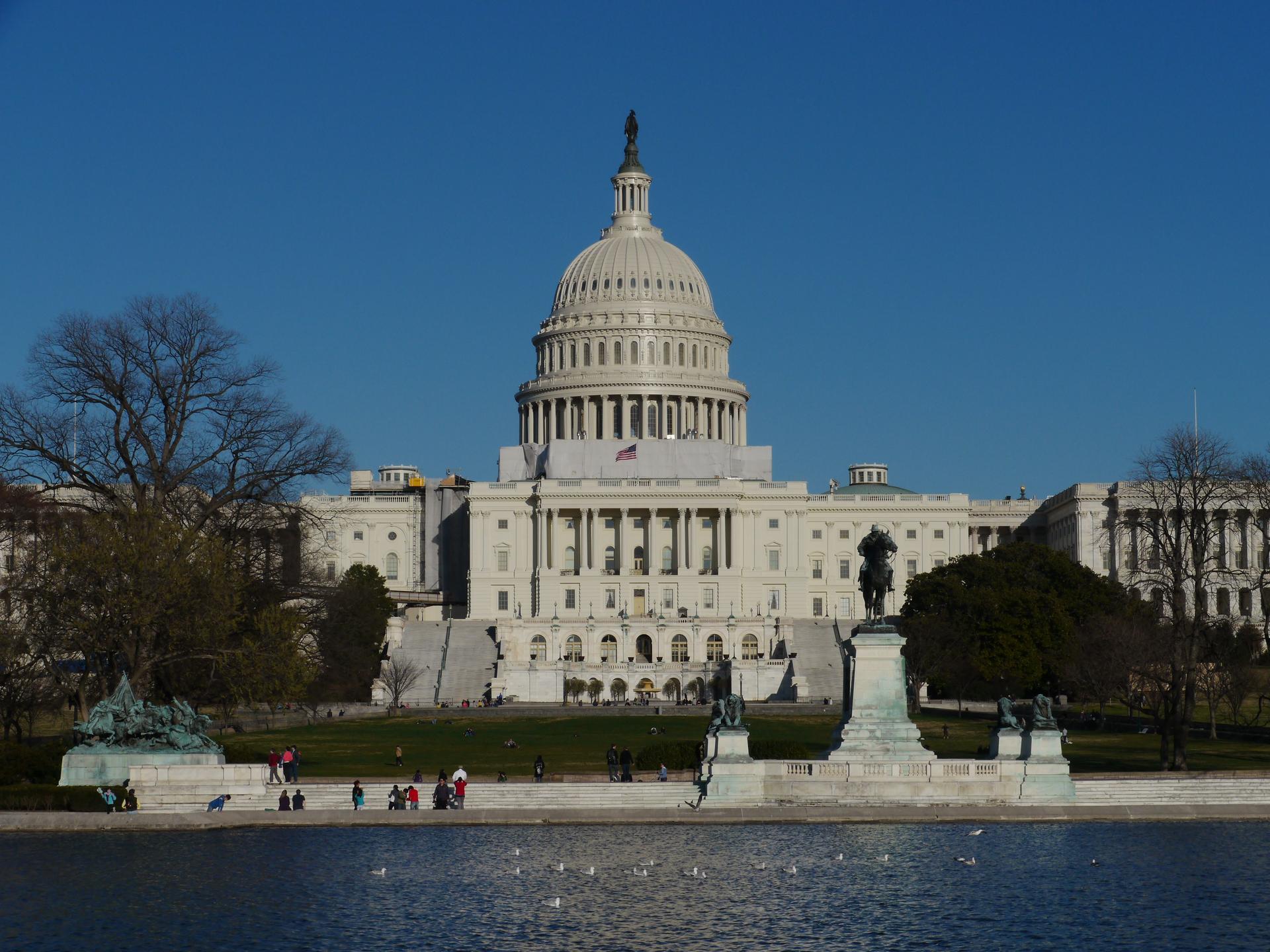
The U.S. Senate entered its final week before midterm elections with lawmakers grappling with a technology that appears to be moving faster than their ability to understand or control it. Artificial intelligence has become a rare issue that crosses party lines in generating public concern, yet Washington remains stuck. The only legislation likely to pass before November is a weak measure urging states to shield consumers from higher electricity bills caused by AI data centers-a band-aid on what many see as a gaping wound.
Sen. Jim Justice, R-W.Va., captured the mood when he said, “The amazement of AI just dumbfounds us all.” That bewilderment has translated into legislative paralysis at a moment when former AI researchers are warning that companies are “gambling with our lives” and when public anxiety about job security has reached new heights.
Public Fear Outpaces Political Action
Pew Research Center found this summer that 71% of Americans worry AI will eliminate jobs over the next 20 years, up 7 percentage points from just two years earlier. Young adults under 30 show even sharper concern, with 73% expecting fewer jobs because of AI-a jump from 61% in 2024. The research notes that “worry over job loss has shown up throughout our research about AI, including among workers and even teenagers.”
These aren’t abstract fears. Data from Stanford Institute for Economic Policy Research shows that while AI hasn’t yet caused mass unemployment, it’s changing the nature of work in ways that make people nervous. Jobs are being consolidated, hiring for automatable tasks is slowing, and the bar for entry-level positions keeps rising. Workers can feel the ground shifting beneath them even if unemployment statistics don’t yet reflect dramatic change.
Yet Congress appears unable to translate constituent anxiety into legislative action. With midterm elections weeks away and lawmakers facing voters who want answers, the gap between public concern and political response has become a chasm.
Synopsis
Congress is struggling to regulate artificial intelligence even as public concern grows over job losses, safety risks, national security, and rising electricity costs. Partisan polarization, industry influence, state-level policy fragmentation, and the Trump administration’s opposition to meaningful regulation have produced legislative paralysis, leaving workers, consumers, and companies without a coherent national framework.
The Fragmented Policy Landscape
Adam Kovacevich, founder and CEO of Chamber of Progress, a center-left tech trade organization, puts it bluntly: “There is no one AI policy debate. There are multiple AI policy debates.” The issues range from existential risks to humanity, job displacement, impacts on children, copyright law, fair use, cybersecurity, and national security threats from foreign adversaries.
Earlier this month, a former researcher at OpenAI and Anthropic warned that AI companies are “gambling with our lives.” An Anthropic colleague followed up saying, “We really do earnestly believe AI could kill all humans!” The company’s CEO urged developers to slow down. These warnings came from people who helped build the technology, not outside critics.
Lawmakers responded with proposals that reflect the fractured nature of the debate. Sen. John Kennedy, R-La., wants a “kill switch” requiring companies to instantly shut off or curb AI functions if things look dangerous. Sen. Bernie Sanders and Rep. Greg Casar, D-Texas, are pushing to pause advanced AI development until the federal government establishes a regulatory framework. A bipartisan group wants tighter export controls to keep China and other adversaries from accessing advanced AI.
Sens. Richard Blumenthal, D-Conn., and Josh Hawley, R-Mo., are seeking a risk evaluation program that would require developers to provide information to the Energy Department before deploying new technology. Hawley is chairing a subcommittee hearing this week on preventing attacks from rogue AI agents.
But none of these proposals appear close to passage. The only bill gaining traction is the Ratepayer Protection Act, which asks-but doesn’t require-state utility commissions to consider ways to limit electricity costs from data centers. It passed the House overwhelmingly but faces broad Democratic opposition in the Senate for being toothless.
Senate Minority Leader Chuck Schumer, D-N.Y., called the bill a “fraud,” telling reporters, “It’s voluntary. No company has to do it.” The industry’s Data Center Coalition says it supports the bill’s goals and welcomes working with Congress to ensure large-load customers pay their own infrastructure costs, but critics see this as corporate hedging rather than commitment.
Three Roadblocks to Regulation
The AI stalemate stems from three major factors that have turned what should be urgent policymaking into a slow-motion standoff.
First, Congress has become deeply polarized in ways that make big legislative swings nearly impossible. For decades, lawmakers tackled emerging issues and industries with comprehensive legislation. The Dodd-Frank banking law of 2010 provided strong consumer protections after the financial crisis. The 1996 Telecommunications Act promoted competition as cable television surged. Those kinds of sweeping bills have become rare.
“I have often told people as a new senator that if we were healthy as a country, if our politics were healthy, we’d be talking about AI every single day,” Sen. Elissa Slotkin, D-Mich., said in an interview. Instead, partisan gridlock prevents substantive debate even on issues where public concern crosses party lines.
Second, state-by-state regulation creates a patchwork that tech companies find unworkable. “The worst case scenario is 50 kinds of state laws. You don’t want to write a different algorithm for different states,” said Darrell West, senior fellow at the Brookings Institution. “Tech firms will want one set of rules.”
States haven’t waited for federal action. Maryland Gov. Wes Moore set up a task force last week to examine new data center plans. Virginia Gov. Abigail Spanberger took a major step toward tight regulation of data centers, though she stopped short of the moratorium many environmental groups wanted. The State Corporation Commission of Virginia ordered data centers to pay for all required upstream transmission infrastructure after electricity prices jumped 76% in some areas. New York Gov. Kathy Hochul imposed moratoriums on large-scale AI data center development.
These state actions address real problems-Federal Reserve Bank of Dallas research found that existing data centers have already pushed wholesale electricity prices 2% to 6% higher nationwide, with bigger increases where facilities are concentrated. Researchers estimate AI data centers could drive prices 20% to 30% higher by 2028. But the state-by-state approach creates regulatory chaos that both industry and consumer advocates agree is suboptimal.
Third, President Donald Trump has made clear he won’t support meaningful AI regulation. “I’m not going to stifle growth of anything that’s going to be bigger than the industrial revolution,” Trump said last week. He’s called efforts to control AI a “hoax” and resisted any bid to regulate the industry. Trump has proposed an “AI Force” with a top official to lead it but offered no specifics about what this would actually do.
Trump is scheduled to meet with industry leaders Tuesday at the White House alongside House Speaker Mike Johnson. Given Trump’s track record of deference to tech executives and his explicit opposition to regulation, expectations for meaningful policy coming from that meeting are low.
Hot Take
Congress’s AI paralysis is becoming its own economic risk.
Every month without clear rules leaves companies guessing, states improvising, workers absorbing the disruption, and households paying for infrastructure decisions they did not make. The longer lawmakers wait, the more disruptive eventual regulation is likely to become.
The Innovation Versus Safety Debate
Underlying all these political obstacles is a genuine tension about how to balance innovation with safety. Some lawmakers and policy experts warn that overregulation could hand leadership to China, where AI development continues at breakneck speed.
Sens. Tom Cotton, R-Ark., and Elizabeth Warren, D-Mass., are pushing the Chip Security Act to prevent advanced American chips from “falling into the hands of China and other countries of concern.” Sen. Jim Banks, R-Ind., is among those sponsoring a bill to ban export of advanced AI chips to China. Sens. Andy Kim, D-N.J., and Pete Ricketts, R-Neb., want assurances China can’t get equipment to make advanced chips.
Trump told Fox News Sunday that “we’re about maybe a year and a half up on China. We’re leading, and we’re building tremendous, trillions of dollars’ worth of places. And why should we give that up?” His comments reflect a common argument: regulation might slow American companies while Chinese competitors race ahead unencumbered.
But this framing oversimplifies the situation. Brookings Institution experts argue Congress needs to pass a federal law creating a predictable, accountable regulatory framework with mandatory third-party audits and licensing for frontier AI. The proposal focuses on material risks like cybersecurity threats, biological weapon misuse, and loss of human control, with clear statutory parameters and criminal penalties for non-compliance. This approach attempts to thread the needle-enabling innovation while establishing guardrails.
West at Brookings notes that tech has operated largely unregulated for 25 years and has become very powerful. “They’re dealing with an industry that hasn’t been regulated for 25 years and is now very powerful,” he said. “It’s hard to regulate powerful industries.” The industry’s lobbying muscle and financial resources give it enormous influence over lawmakers who depend on campaign contributions and often lack technical expertise.
The Human Cost of Delay
While Washington debates, real people face real consequences. The Stanford research showing AI hasn’t yet caused mass job displacement offers cold comfort to workers who see their roles changing or disappearing. AI’s biggest impact isn’t necessarily on the number of jobs but on their nature. Entry-level positions that once provided pathways to careers are being automated or eliminated. The jobs that remain require higher skills and qualifications.
Young workers entering the labor market face particular challenges. They’re competing for fewer entry-level positions while being told they need more credentials and experience. The 73% of adults under 30 who think AI will lead to fewer jobs aren’t responding to abstract theory-they’re reacting to what they see in the job market.
On the electricity front, households in Virginia, Maryland, New York, and other states with heavy data center concentrations are already paying more. The Federal Reserve research estimating 2% to 6% higher wholesale prices translates to real money for families budgeting for monthly bills. Projections of 20% to 30% increases by 2028 represent significant financial strain, particularly for low- and middle-income households.
What Comes Next
Sen. Kennedy tried to force a Senate vote this month on his kill switch proposal. Sen. Rand Paul, R-Ky., blocked it. Their exchange on the Senate floor captured the impasse.
“When approaching something as important as innovation, as AI, I think we should make sure we have as many facts as possible before we dictate rules for the whole economy,” Paul said.
Kennedy was frustrated: “We are not going to get up off of our ice-cold, lazy butts and address this anytime soon. It is just not going to happen, and we all know that.”
Kennedy acknowledged the difficulty: “It is hard to know precisely what to believe about artificial intelligence. There are some things, it seems to me, that we do know. We know, for example, that it is a breathtaking technology.”
Sen. Kim told reporters last week that people want assurance AI will be safe and “they want the United States to continue to be a leader on innovation. The two are not mutually exclusive.” That’s the central challenge Congress faces-figuring out how to pursue both goals simultaneously.
West at Brookings sees grounds for cautious optimism about future action. “It wasn’t that long ago people had a positive view about technology,” he said. “Now sentiment has turned against it. The odds of something getting done are going up substantially.” Public opinion has shifted dramatically, with 52% of Americans now saying they’re more concerned than excited about increased AI use in daily life-up from 37% in 2021.
That shift matters because lawmakers eventually respond to sustained public pressure, particularly when it affects their electoral prospects. With midterms approaching and AI anxiety rising, some form of legislative action seems increasingly likely, even if not immediately.
But timing matters. The technology isn’t waiting for Congress to catch up. Every month of delay means more AI systems deployed without oversight, more workers displaced without support, and more risk accumulating in systems that even their creators admit they don’t fully understand or control. The gap between technological capability and regulatory framework grows wider, making eventual policy responses harder and more disruptive.
Congress’s struggle with AI regulation reveals something larger than a policy dispute. It shows a political system straining to manage rapid technological change while hampered by partisan division, industry lobbying, and executive branch resistance. The 71% of Americans worried about job losses and the 52% more concerned than excited about AI represent a public crying out for leadership and getting, at best, half-measures and delay.
Whether that changes before the midterms-or before AI’s impacts become impossible to ignore-remains an open question. For now, bewilderment and paralysis continue to define Washington’s response to one of the most consequential technologies of the century.
Frequently Asked Questions
Why is Congress struggling to regulate artificial intelligence?
How worried are Americans that AI will eliminate jobs?
What changes is AI already causing in the workplace?
What AI policies are lawmakers proposing?
What AI-related legislation is most likely to pass?
How are AI data centers affecting electricity prices?
Why is state-by-state AI regulation considered a problem?
What is the debate over AI innovation and safety?
What role has President Donald Trump played in the regulatory stalemate?
What could happen next with AI regulation?
Sources
- Pew Research Center — Public concern about AI-driven job losses
- Stanford Institute for Economic Policy Research — Evidence on AI’s effects on jobs and unemployment
- Brookings Institution — Case for a predictable federal AI governance framework
- Federal Reserve Bank of Dallas — Data centers, electricity prices, and household costs
- The Guardian — Why predicted mass job losses have not yet appeared in unemployment data
- CNN — The fragmented federal response to AI regulation