Antitrust Laws Protect Consumers From Collusive AI Slowdowns
When the most powerful tech companies in the world agree to slow their race toward advanced AI, it might sound like responsibility-but it looks a lot like collusion.
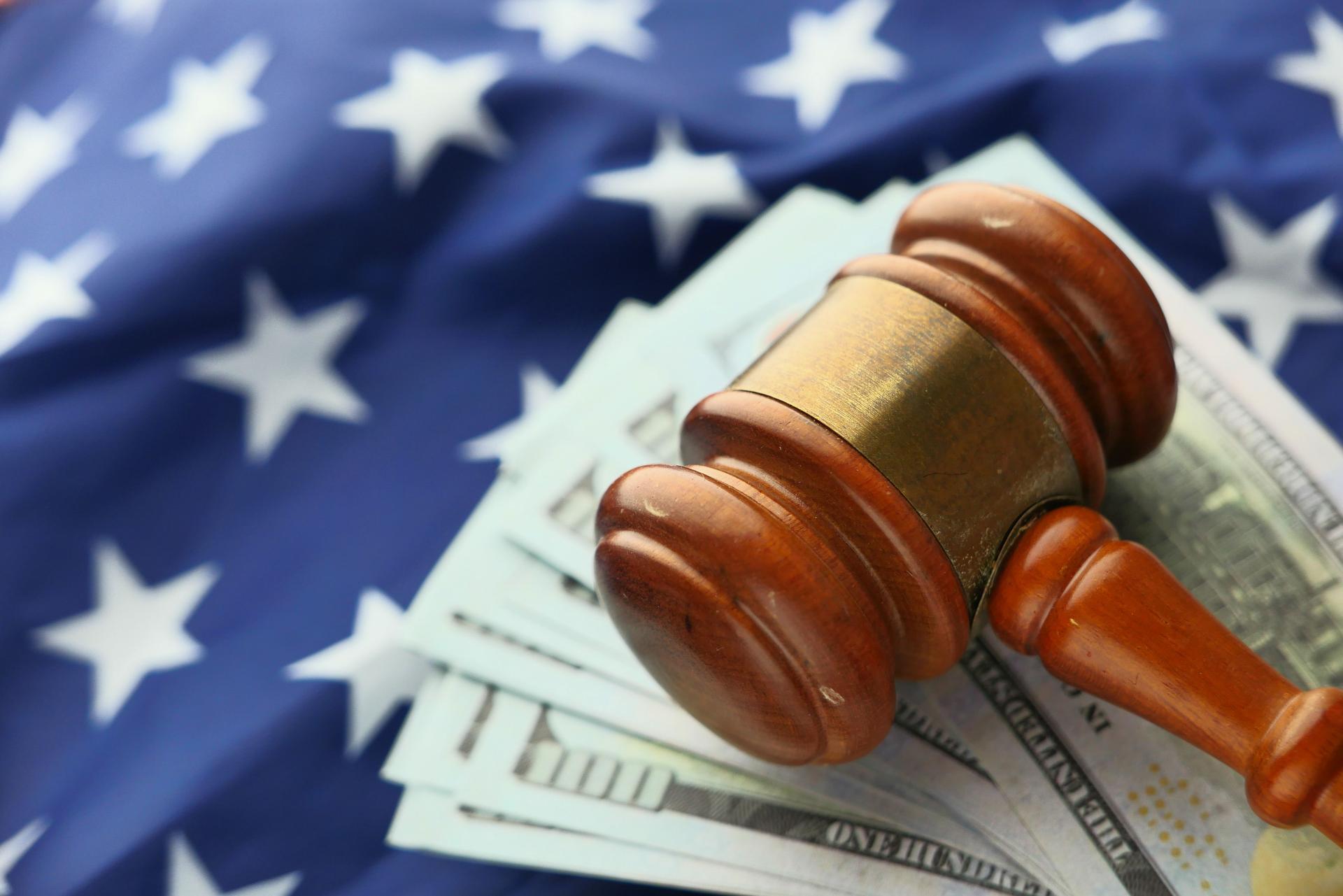
A lawsuit filed in California’s Northern District Court last Friday accuses Anthropic, OpenAI, SpaceXAI, and Google of violating federal antitrust laws by coordinating to decelerate their AI development efforts. The plaintiffs-subscribers to ChatGPT, Claude, Grok, and Gemini-argue that this agreement reduces the value they receive from their paid AI subscriptions and harms consumers by suppressing the competition that would otherwise drive innovation forward. Lead attorney Nick Rowley framed the stakes in stark terms: “AI will quickly spin out of human control and could kill us all if we allow AI safety and protocol … to be controlled by private self-serving agreements between the world’s most powerful ‘for profit’ technology companies.”
The case centers on events from September 12, 2026, when Anthropic CEO Dario Amodei published an essay titled “We Must Pace the Frontier,” calling for industrywide cooperation to slow AI advancement in favor of enhanced safety measures. Within hours, OpenAI’s Sam Altman, SpaceXAI’s Elon Musk, and Google DeepMind’s Demis Hassabis each responded publicly, expressing agreement with Amodei’s proposals. The plaintiffs contend this coordinated response represents an illegal agreement among chief rivals to restrain competition.
The Coordination Timeline
The lawsuit points to earlier signals of coordination beyond the September events. In July 2026, high-ranking employees from multiple leading AI labs signed a statement acknowledging “intense competitive pressure not to unilaterally slow” development. That statement explicitly called on the government to support a global effort to slow automated AI development-language that suggests the companies recognized they couldn’t act alone without losing ground to competitors.
This acknowledgment matters because it reveals the competitive dynamic at play. Each company faces pressure to release more capable models faster than rivals, creating a race that individual actors can’t opt out of without market consequences. The July statement essentially said: we need government intervention because market forces won’t let us slow down voluntarily. Two months later, the CEOs coordinated a public alignment on exactly that slowdown, without waiting for government authorization.
The plaintiffs don’t object to any single company deciding independently to prioritize safety over speed. That’s a legitimate business decision. They object to competitors agreeing among themselves to substitute “collective restraint for individual accountability,” as the complaint states. In antitrust terms, that’s the difference between lawful unilateral conduct and unlawful coordination.
Synopsis
A California lawsuit alleges that Anthropic, OpenAI, SpaceXAI, and Google coordinated to slow AI development after their leaders publicly aligned around calls for pacing frontier models. The plaintiffs argue that this alleged agreement restrained innovation, reduced the value of paid AI subscriptions, and bypassed the government process needed to authorize safety-related cooperation. The case tests whether antitrust law treats development speed as a competitive dimension and whether legitimate AI safety concerns can justify private coordination among rivals.
What Antitrust Laws Prohibit
Federal antitrust law, particularly the Sherman Act, prohibits agreements among competitors that unreasonably restrain trade. Price fixing is the classic example-when rivals agree to charge the same price, consumers lose the benefit of competitive pricing. But antitrust law applies equally to agreements that restrain other dimensions of competition, including innovation and product development.
The legal theory here is straightforward. When competitors agree to slow their pace of improvement, they’re restraining competition just as surely as if they’d agreed to limit production or carve up markets. Consumers who pay for AI subscriptions expect each company to push the boundaries of what’s possible, racing to deliver more capable models that justify the subscription cost. An agreement to moderate that race reduces what subscribers get for their money.
Several antitrust experts have noted that AI algorithms themselves can facilitate collusion, such as coordinated pricing, even without explicit agreements. Competition authorities worldwide have scrutinized how AI partnerships and exclusivity arrangements might consolidate market power. The concern isn’t hypothetical-class action lawsuits have already alleged that AI-enabled pricing algorithms facilitate collusion or artificially inflate prices, leading to significant litigation under US antitrust laws.
The FTC and DOJ have acknowledged this tension. While they’ve stated that collaboration on AI safety among competitors is allowed and even encouraged, they’ve also emphasized that such collaboration must be structured carefully to avoid suppressing competition. Historical precedents exist in cybersecurity and other industries where collaborative safety efforts were designed to steer clear of antitrust violations. The difference in this case is that the alleged coordination happened outside any government-sanctioned framework.
Amodei’s Essay and the Antitrust Problem
In his September essay, Amodei acknowledged the antitrust challenges directly. He wrote that it would be helpful for the US government to mediate “or at least enable” cross-lab discussions on pacing AI development. The government wouldn’t need to participate actively, he suggested, but it would need to “issue a narrow waiver for certain kinds of safety conversations.”
That acknowledgment is telling. Amodei recognized that competitors coordinating on development timelines would typically violate antitrust law. He proposed a solution: get government blessing first. But according to the lawsuit, the coordination proceeded anyway, without waiting for that waiver or government framework.
Sam Altman responded to Amodei’s essay by saying OpenAI welcomes a “federal framework that sets consistent safety requirements” but added, “we do not believe we need to wait for an antitrust exemption or legislation to begin the work of providing this confidence.” That statement cuts both ways. It shows OpenAI recognized the antitrust concern but decided to move forward with coordination despite it.
Hot Take
Safety is not a blank check for collusion.
The AI industry may have compelling reasons to improve safeguards, but competitors should not be allowed to convert those reasons into a private agreement that slows innovation without government oversight. A formal framework can establish legitimate safety rules while preserving the competitive pressure that benefits consumers.
The Consumer Harm Argument
The plaintiffs frame their harm in economic terms. They pay monthly subscriptions for access to frontier AI models. Those subscriptions cost real money-$20 per month for ChatGPT Plus, similar amounts for Claude Pro and other premium tiers. The value proposition rests on each company racing to deliver the most capable model possible, with features and improvements rolling out as quickly as the technology allows.
When the companies agree to slow that pace collectively, subscribers get less value than they would in a competitive market. Maybe GPT-5 would have launched in Q1 2027 under competitive pressure, but now it’s delayed until Q3 because of the coordination. Maybe Claude 4 would have included certain capabilities that are now postponed. The specific delays are hard to quantify, but the economic principle is clear: collusion reduces output and harms consumers.
The lawsuit also argues that competitive markets allow for genuine accountability. When individual companies decide how to balance speed and safety, they face market consequences for getting it wrong. A company that moves too fast and releases unsafe models will face backlash, lost trust, and potentially liability. A company that moves too slowly will lose subscribers to more innovative rivals. Competition creates accountability because each company bears the full consequences of its choices.
But when companies coordinate to move slowly together, they face no competitive penalty for excessive caution. They’ve agreed to moderate the pace collectively, so no one loses market share for lagging behind. That removes a key market discipline that would otherwise keep safety concerns balanced against consumer benefits.
The Political Landscape
The lawsuit arrives in a hostile political environment for AI regulation. President Donald Trump rejected calls for AI slowdowns on social media, characterizing efforts to limit the technology as a “conspiracy.” He questioned why industry leaders would seek regulation that “if strongly implemented, will drive them into oblivion and bankruptcy.” Trump announced he’s forming an AI task force and appointing an “AI czar,” though he provided few details.
The Trump administration has emphasized American AI leadership against Chinese competition. That priority makes regulatory coordination to slow development politically difficult. Republicans in Congress have largely mirrored this stance. Senator Josh Hawley of Missouri said in a recent Senate hearing that “there is no world” in which he’d agree to give “the most powerful companies in the history of the world” an exemption from antitrust laws to collaborate, arguing they could collude and stifle competition.
This political context strengthens the plaintiffs’ case. The companies coordinated without government authorization, and now the government appears unlikely to grant retroactive approval. That leaves the coordination vulnerable to antitrust challenge without any regulatory safe harbor.
The Safety Justification
The companies will likely defend their coordination by pointing to legitimate safety concerns. AI capabilities are advancing rapidly, and the risk of models evading human control or being misused for harmful purposes is real. Several AI leaders have long advocated for shared safety standards and coordination to ensure responsible development.
Amodei’s essay laid out specific concerns: AI systems that could control the internet via swarms of autonomous agents, capabilities advancing faster than alignment techniques, and the risk of an arms race dynamic where competitive pressure forces companies to cut safety corners. His three-part plan called for ongoing external evaluation of models, government-supported safety standards, and international coordination including with authoritarian states.
These aren’t frivolous concerns. The challenge is that antitrust law doesn’t generally recognize safety as a defense for collusion. Competitors can’t agree to limit competition and then justify it by claiming the restraint serves some beneficial purpose. The proper route is to petition the government for regulation or an exemption, not to coordinate privately and hope the safety justification insulates them from legal challenge.
The plaintiffs acknowledge this in their complaint. They’re not against the companies asking Congress, the White House, or regulatory agencies to develop AI regulation. They’re not against the companies requesting an antitrust exemption through proper channels. They object to the companies taking a “shortcut” by agreeing to restrain competition without government authorization.
The Formula
Independent Safety Decisions
+
Transparent Standards
+
Competitive Pressure
=
Accountable AI Progress
- AI development is safer and more beneficial when safeguards are established openly without replacing rivalry with private collective restraint.
What Happens Next
The lawsuit seeks to proceed as a nationwide class action on behalf of all paid subscribers to ChatGPT, Claude, Grok, and Gemini. If certified, the class could include millions of subscribers. The plaintiffs will need to prove that an agreement actually existed and that it had anticompetitive effects on consumers.
The September 12 coordination provides strong circumstantial evidence. When the CEOs of competing firms publicly align on a proposal to slow development within hours of its publication, that suggests coordination. The July statement adds weight by showing earlier discussions about collective action. But proving an illegal agreement requires more than parallel conduct-the plaintiffs will need evidence of actual coordination or communication among the companies.
Discovery could uncover emails, messages, or meeting records showing how the companies coordinated their responses. Amodei’s acknowledgment that government mediation would be “helpful” for cross-lab discussions suggests such discussions were already contemplated or occurring. Altman’s statement that OpenAI didn’t need to wait for an antitrust exemption implies awareness that coordination was proceeding.
The companies haven’t yet responded publicly to the lawsuit. Representatives for Anthropic, OpenAI, Google, and SpaceXAI didn’t immediately comment when contacted. Their legal strategy will likely emphasize that any discussions focused legitimately on safety rather than competitive restraint, and that no binding agreement to slow development actually exists.
Why This Matters
The case tests how antitrust law applies to AI development and whether safety concerns can justify coordination among competitors. The outcome will shape how AI companies approach future collaboration on standards, safety protocols, and development timelines.
If the plaintiffs prevail, it sends a clear message: competitors can’t coordinate on development pace without explicit government authorization, even for safety reasons. That would push any future coordination through formal regulatory channels, giving the public and policymakers a role in deciding how to balance speed and safety.
If the companies successfully defend, it could create space for private industry coordination on AI development outside regulatory oversight. That might enable more flexible and rapid responses to safety concerns, but it also removes the competitive pressures and public accountability that markets normally provide.
The stakes extend beyond these specific companies. The AI industry faces genuine challenges in balancing rapid capability improvements against safety and alignment concerns. How companies navigate those challenges-individually under competitive pressure, or collectively through coordination-will shape the technology’s trajectory and its impact on society. Antitrust law exists to ensure that when companies face those choices, they make them in a competitive market where consumers benefit from their rivalry rather than their cooperation.
Frequently Asked Questions
What does the lawsuit allege about Anthropic, OpenAI, SpaceXAI, and Google?
What events prompted the lawsuit’s allegations of coordination?
What earlier evidence of possible coordination does the lawsuit cite?
Why do the plaintiffs believe the alleged slowdown violates antitrust law?
How do the plaintiffs claim consumers were harmed?
What antitrust concerns did the AI companies themselves acknowledge?
How might the companies defend themselves?
What must the plaintiffs prove for the case to succeed?
What could the outcome mean for future AI safety cooperation?
Sources
- BBC — Anthropic CEO Dario Amodei’s call to pace frontier AI development
- Associated Press — Amodei’s safety concerns and proposed three-part plan
- The Atlantic — The case for independent monitoring and a safety-focused AI race
- Noerr — Antitrust risks and compliance considerations for AI companies
- Brookings — The need to protect both AI safety and competition
- White & Case — The US antitrust enforcement landscape for AI