Delays in AI Datacenter Projects Reflect Complex Innovation Challenges
The stalling of major AI datacenter projects across the United States has prompted discussions about local opposition and regulatory hurdles, but the real story may be more about the inherent difficulties of scaling ambitious infrastructure at unprecedented speed and scope.
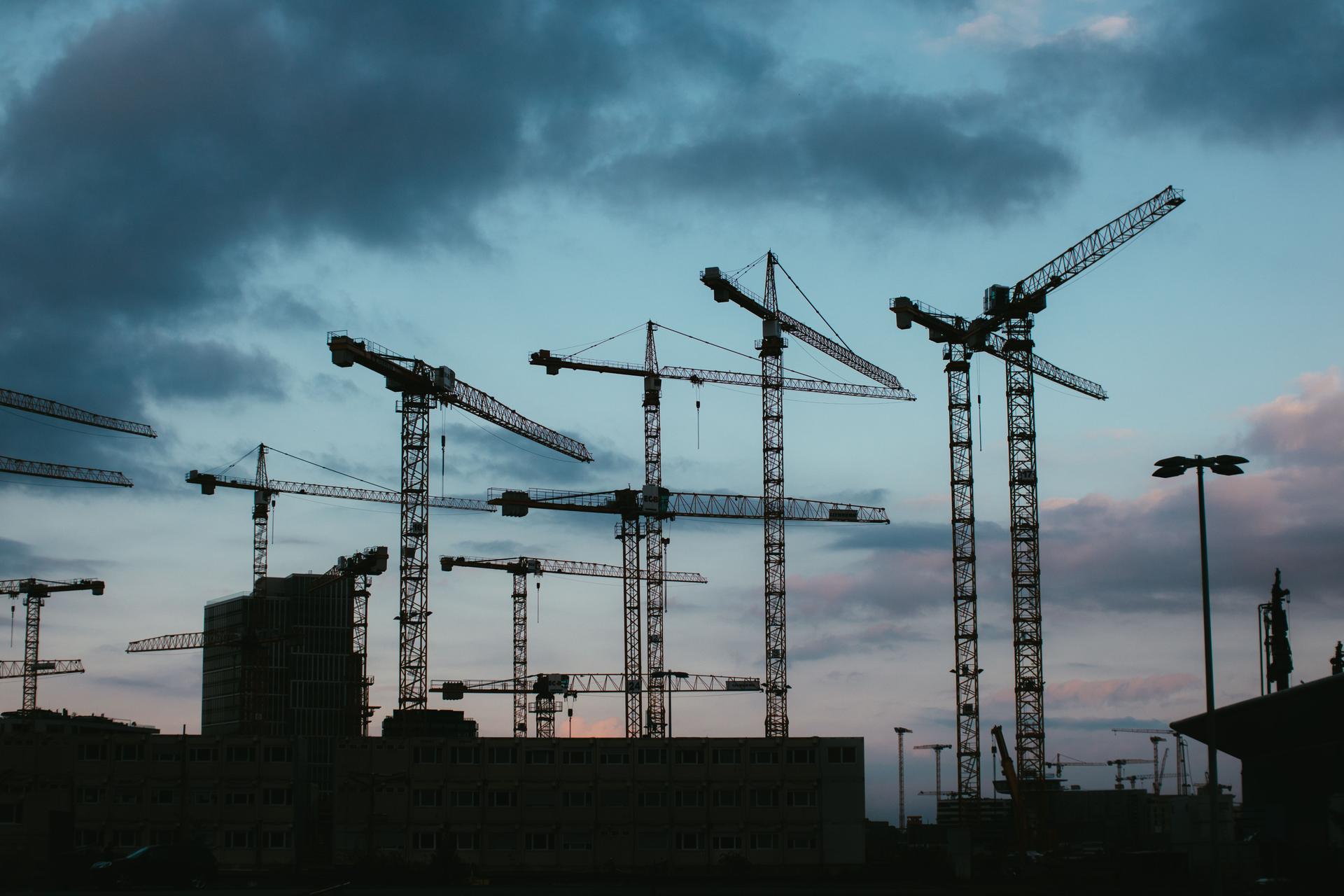
The delays hitting AI datacenter projects like Stargate have been framed as a crisis driven by community resistance and political roadblocks. Texas Governor Greg Abbott paused datacenter projects pending audits. New York imposed a moratorium. Oracle cited force majeure to potentially delay payments on a massive New Mexico site. The narrative has settled into a familiar groove: bureaucrats and NIMBYs standing in the way of progress.
But that framing misses something important. These delays aren’t primarily about opposition. They’re about the challenges that emerge when companies try to build infrastructure at a scale and pace that outstrips existing systems, supply chains, and coordination mechanisms. The problems facing projects like Stargate reveal what happens when ambition collides with the practical realities of construction, financing, energy procurement, and multi-party collaboration.
The Scope of What’s Being Attempted
The Stargate project announced in January 2025 represented a $500 billion commitment to build a constellation of international datacenters. Oracle committed $300 billion to work with OpenAI. Individual sites like Jupiter in New Mexico were projected to generate 2.45 GW of compute power at a cost of $50 billion over five years. OpenAI has committed to spend about $750 billion on datacenter capacity by 2030.
These aren’t incremental expansions. They’re attempts to create entirely new categories of infrastructure in compressed timeframes. The Jupiter datacenter alone would require power equivalent to what serves large cities. The Abilene, Texas site was initially planned for 2 GW of capacity before being scaled back. These facilities need dedicated power plants, massive water cooling systems, and supply chains that can deliver thousands of GPUs and other specialized hardware.
When projects operate at this scale, every component becomes a potential bottleneck. Getting a gas pipeline approved. Securing rights-of-way across state land. Coordinating between Oracle, OpenAI, SoftBank, and other partners on ownership structures and control. Negotiating with utilities about grid connections. Each of these elements carries risk, and when you’re building dozens of sites simultaneously, the probability that something goes wrong somewhere approaches certainty.
Synopsis
Delays affecting Stargate and other AI datacenter projects are often portrayed as the result of political obstruction or local resistance. A closer look points to a broader coordination problem: companies are attempting to build power-intensive, water-intensive infrastructure at a pace that exceeds existing supply chains, grids, permitting systems, labor pools, and partnership structures. Regulatory and community concerns are real, but they are only part of a larger collision between aggressive AI expansion plans and the practical limits of infrastructure development.
Partnership Complexity and Governance Disputes
The Stargate delays stemmed partly from disputes among partners about site ownership and system control. OpenAI initially wanted to own datacenters independently but had to renegotiate when investors balked at the massive upfront costs. SoftBank paused its $50 billion acquisition of datacenter operator Switch because of regulatory hurdles. Oracle and OpenAI have reportedly clashed over who controls what.
These aren’t trivial disagreements. When you’re talking about $50 billion facilities, the question of who owns the infrastructure and who controls operations has enormous financial and strategic implications. OpenAI needs the compute capacity to train its models. Oracle wants to build its cloud business. SoftBank is looking for returns on massive capital deployment. Each party has different priorities, different timelines, and different risk tolerances.
The friction that emerges from these competing interests isn’t a sign that the projects are doomed. It’s what happens when sophisticated organizations with different business models try to coordinate at scale. Partnership disputes and renegotiations are features of complex deals, not bugs introduced by external opposition. The fact that these conflicts are surfacing now reflects the difficulty of aligning multiple stakeholders around projects that dwarf anything previously attempted in this sector.
Technical and Supply Chain Challenges
OpenAI’s strategy for Stargate involved building dedicated power plants to serve datacenters, a behind-the-meter approach that would avoid some grid constraints. This introduced technical and supply chain challenges that partners apparently underestimated. Crusoe, a development partner, faced operational failures and rising costs. Buildings planned for completion by March 2026 were still offline in June 2026.
Building power plants takes time. Getting the right turbines, transformers, and other equipment requires navigating global supply chains where datacenter projects are competing with consumer electronics, electric vehicle infrastructure, and grid modernization efforts. AI datacenters need specialized cooling systems that consume enormous amounts of water. They need fiber optic connections with massive bandwidth. They need backup power systems and redundancy at every level.
When demand for these components spikes across the industry simultaneously, delivery times stretch and costs rise. That’s not opposition. That’s logistics. The delays attributed to supply chain issues reflect the fact that building infrastructure at this pace requires an industrial base that doesn’t quite exist yet. Companies are trying to procure equipment and expertise faster than manufacturers and contractors can scale up production and staffing.
Our Perspective
The central lesson is not that AI datacenters cannot be built, but that announcements are being treated as if they were construction schedules. Projects of this scale need realistic sequencing, transparent cost allocation, durable governance, and early engagement with utilities and communities. Treating every audit or permit dispute as anti-innovation obscures the operational weaknesses that ambitious developers must solve if the AI buildout is to become durable rather than merely spectacular on paper.
Energy and Regulatory Realities
Governor Abbott’s audit of datacenter projects in Texas focuses on energy use, water consumption, and community impact. ERCOT is tracking more than 1,800 projects representing over 474 gigawatts of electricity, roughly five times the grid’s peak demand record. About 90% of new power requests come from datacenters.
Those numbers create legitimate questions about grid capacity and resource allocation. Texas experienced grid failures during winter storms that left millions without power. The state’s electric system operates independently from the rest of the country, which limits its ability to import power during shortages. When datacenter developers request hundreds of gigawatts of new capacity, regulators have to figure out where that power will come from and whether the grid can handle it.
The audit isn’t arbitrary obstruction. It’s an attempt to gather information about projects that could fundamentally reshape the state’s energy landscape. Regulators want to know who’s financing these facilities, how much power and water they’ll actually use, what backup systems they have, and whether they’re contributing to local infrastructure costs or relying on subsidies.
Some tech companies have responded by agreeing to reuse water and provide their own power generation to reduce grid demand. That’s the kind of adaptation that emerges from regulatory engagement. The pause gives both sides time to figure out how to make large-scale datacenter development work without destabilizing existing systems.
The New Mexico Pipeline Dispute
Oracle’s Jupiter project in New Mexico hit a snag when the state land office repeatedly denied right-of-way for a gas pipeline to fuel the datacenter. This led Oracle to cite force majeure as a potential reason to delay payments to Stack Infrastructure, the developer building the site.
Pipeline right-of-way disputes happen all the time in energy and infrastructure projects. They involve questions about land use, environmental impact, tribal consultation, and competing priorities for public land. The New Mexico State Land Office manages millions of acres held in trust to generate revenue for public schools and institutions. When considering right-of-way requests, the office has to balance commercial development against other uses and long-term stewardship obligations.
The pipeline denial isn’t necessarily about opposing AI or datacenters. It could reflect concerns about routing, environmental impact assessments, or alternative proposals. The fact that Oracle is invoking force majeure suggests the company views the regulatory process as creating delays outside its control, but that’s different from saying the delays are unjustified or purely political.
Getting large infrastructure projects through permitting processes takes time. Environmental reviews, public comment periods, impact studies, and regulatory coordination are standard parts of development. Projects that try to compress these timelines often face pushback not because of opposition to the project itself, but because stakeholders need time to evaluate proposals and negotiate terms.
Political Dimensions and Midterm Elections
President Trump has pushed for massive datacenter buildouts and called resistance a “sick conspiracy.” He maintains that his leadership is sufficient to manage any problems AI might create. The upcoming midterm elections will test whether voters agree.
Polls show 70% of Americans oppose building AI datacenters near their homes, with concerns about resource use, pollution, traffic, and utility bills. Opposition crosses party lines, with Democrats showing particularly high intensity. Several states have introduced moratoriums or regulations requiring datacenters to pay for infrastructure and meet environmental standards.
This political landscape complicates the narrative that delays are simply about bureaucratic obstruction. When large majorities oppose local datacenter development, elected officials and regulators have to respond to those concerns. That’s how representative government works. The fact that opposition is bipartisan suggests people across the political spectrum see legitimate issues with how datacenter development has proceeded.
The political debate isn’t really about whether AI datacenters should exist. It’s about where they should be located, who should pay for the infrastructure they require, and how to balance their economic benefits against their environmental and community impacts. Those are genuine policy questions that don’t have obvious answers, and working through them takes time.
Glossary
- Behind-the-meter power — Electricity generated directly for a facility rather than supplied through the wider grid.
- Datacenter — A facility that houses computing, networking, storage, cooling, and power systems.
- Force majeure — A contract provision invoked when extraordinary events outside a party’s control affect performance.
- Gigawatt (GW) — A unit of power equal to one billion watts, used to describe very large electricity demands or generation capacity.
- Grid capacity — The amount of electricity an electric system can reliably generate, transmit, and distribute.
- Hyperscale datacenter — A very large datacenter designed to support massive computing workloads and expand substantially.
- Moratorium — A temporary pause on approvals, construction, or other activity while policies or impacts are reviewed.
- Right-of-way — Legal permission to use land for infrastructure such as pipelines, roads, or transmission lines.
- Supply-chain bottleneck — A shortage or delay in materials, equipment, labor, or transportation that limits project progress.
- Stargate — A large-scale initiative associated with OpenAI and partners to develop extensive AI computing infrastructure.
Stargate’s International Complications
Stargate delays extend beyond the United States. In the UAE, geopolitical tensions threatened a planned project. In the UK, OpenAI halted plans for an 8,000-GPU datacenter in April 2026, citing power costs and regulatory hurdles. The company may now turn to Canada, though tariffs imposed by the Trump administration threaten buildouts there.
Each country has different regulatory frameworks, energy markets, and political considerations. Building international infrastructure means navigating multiple legal systems, permitting processes, and business environments simultaneously. The UK’s power costs reflect its energy market structure and climate policies. UAE geopolitics involve regional security concerns and relationships with other nations. Canadian projects face tariff questions tied to trade policy.
These international complications underscore that the delays aren’t mainly about local opposition in Texas or New York. They reflect the difficulty of coordinating massive infrastructure projects across different jurisdictions with different rules, priorities, and constraints. Companies can’t simply decide to build datacenters and expect every government to immediately accommodate them.
The Self-Imposed Slowdown Narrative
Anthropic, OpenAI, and SpaceX have suggested slowing AI development to keep the technology under human control. Skeptics question whether this represents genuine safety concerns or an attempt to spin actual slowdowns in model improvement as a noble effort to protect society.
Given the datacenter delays, the labs may be forced to forgo some planned progress regardless of their stated reasoning. OpenAI’s $750 billion spending commitment assumes datacenter capacity will come online as planned. If projects like Stargate continue facing delays, the company will have less compute available for training new models, which will constrain what it can build.
The coincidence of infrastructure delays and calls for slower AI development creates ambiguity about cause and effect. Are the labs choosing to slow down, or are they adapting messaging to match constraints they can’t control? Either way, the practical result is similar: AI model development may proceed more slowly than the aggressive timelines companies announced.
What the Delays Actually Reveal
The datacenter delays reveal that building infrastructure at unprecedented scale introduces challenges that go beyond overcoming opposition. Coordinating multiple partners with different priorities takes time. Navigating supply chains that can’t instantly scale up creates bottlenecks. Working through regulatory processes designed for normal-sized projects requires adaptation. Securing energy and water resources at levels that dwarf existing facilities raises legitimate planning questions.
None of this means the projects won’t eventually succeed. It means they’re harder than the initial announcements suggested. Companies learned this pattern with other ambitious infrastructure projects. High-speed rail, utility-scale renewable energy, semiconductor fabs, and other large buildouts routinely take longer and cost more than initial projections because reality is more complicated than plans.
The growing pains facing AI datacenter development are signs of an industry trying to scale faster than its supporting infrastructure can adapt. That’s a coordination problem, a logistics problem, a financing problem, and a technical problem. Opposition from communities and regulators is one factor among many, and probably not the most significant one.
Projects at this scale require years to plan, permit, finance, and construct under the best circumstances. When companies try to compress those timelines while simultaneously negotiating complex partnerships and navigating supply constraints, delays become almost inevitable. The question isn’t whether AI datacenters will face obstacles. It’s whether the industry can adapt its timelines and approaches to match the realities of building infrastructure that the world has never seen before.
Frequently Asked Questions
Why are major AI datacenter projects being delayed?
What is the scale of the Stargate project and related AI infrastructure plans?
How have disagreements among Stargate partners affected construction?
What technical and supply-chain problems are affecting AI datacenter construction?
Why did Texas pause some datacenter projects?
What caused the dispute involving Oracle’s Jupiter project in New Mexico?
Why are communities and politicians pushing back against AI datacenters?
Are the delays limited to the United States?
Sources
- Texas Tribune: New Texas data center projects frozen until state audits them
- Tom’s Hardware: Stargate delays reportedly tied to partner disputes
- Distilled: OpenAI’s Stargate data centers are taking longer and costing more than expected
- Data Center Knowledge: Stargate’s buildout meets reality
- Gallup: Americans oppose AI data centers in their area
- Harvard Gazette: Why communities are pushing back against data centers
- OpenAI: Stargate advances with partnership with Oracle
- Deloitte: Can US infrastructure keep up with the AI economy?