
AI Misuse in Court Filings Threatens Judicial Integrity
A Florida appeals court just issued a stark warning: the flood of AI-generated legal filings is becoming a serious threat to how courts function.
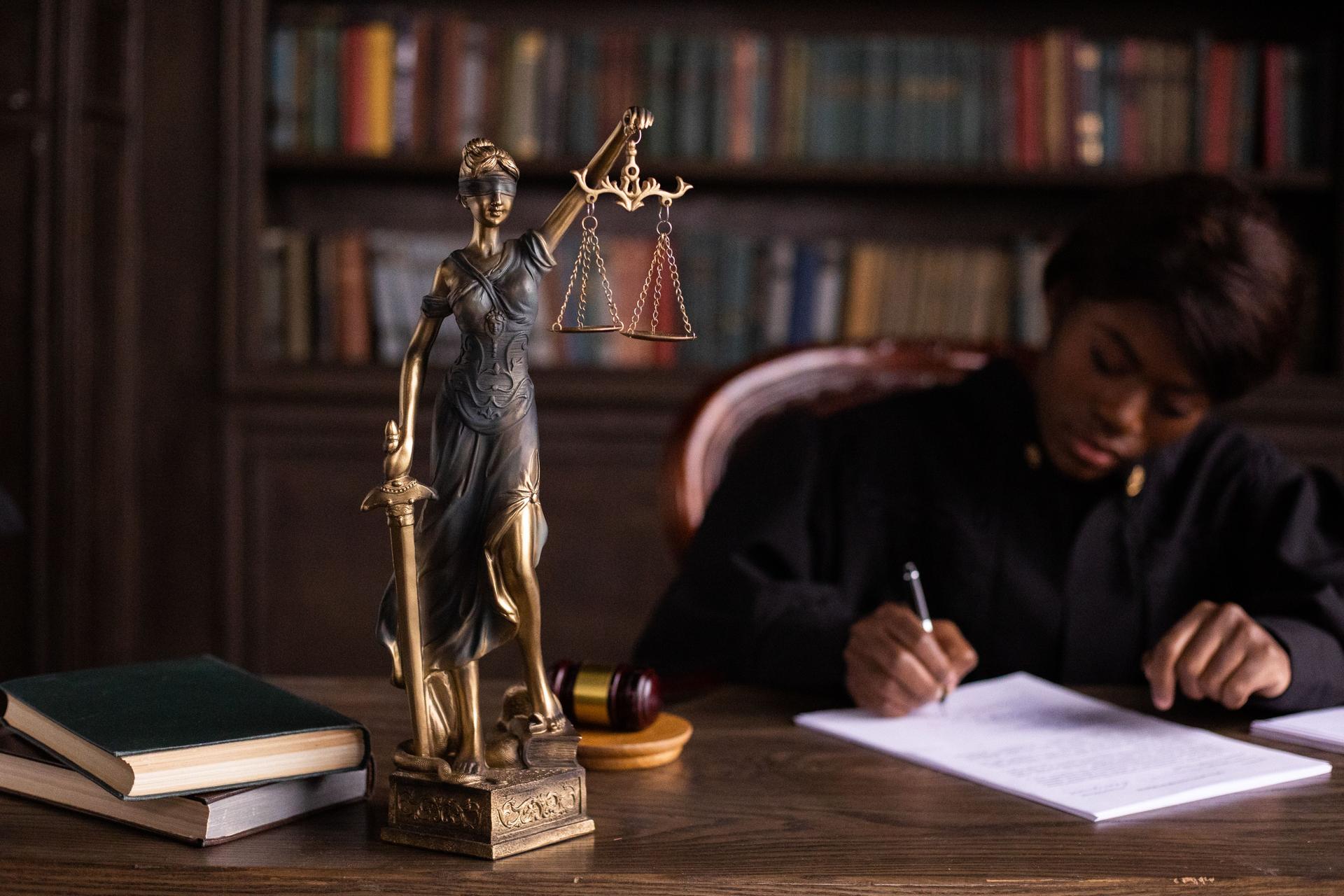
Florida’s Fourth District Court of Appeal recently dealt with a case that highlights what many judges are seeing across the country. In a September 2026 opinion, the court rejected a petition filed by attorney Jaclyn Soroka, pointing to what it suspected were AI-generated components in her submissions. The court didn’t mince words, describing the filings as containing “gibberish” that “abuse the litigation process” with “convoluted, false and frivolous arguments.” Even more concerning, Soroka allegedly made accusations against a trial judge that the official record didn’t support. The court used a term that’s gaining traction in legal circles: “AI slop.”
Soroka denied using AI to draft her filings when asked by Law.com, stating clearly that she doesn’t use artificial intelligence to generate court documents in any of her cases. She also noted that the court didn’t accuse her of citing hallucinated cases or fabricated law. But the court’s opinion reveals something bigger than one attorney’s disputed work product. It shows how the proliferation of AI tools is creating operational chaos in courtrooms, and judges are running out of patience.
The Scale of the Problem
Three years after the first U.S. court imposed sanctions over AI-generated errors, the number of attorneys admitting they used AI carelessly keeps climbing. According to Reuters reporting from September 2026, the problem is getting worse despite years of warnings. In just the first six weeks of 2026, 40 sanctions were issued to attorneys for AI-related errors. That pace suggests hundreds of cases annually where AI misuse reached a threshold serious enough for formal punishment.
Federal judges have issued monetary sanctions ranging from $1,000 to $10,000 against attorneys who filed briefs containing fabricated citations. In one Illinois circuit court case, sanctions hit $60,000 for a law firm and attorney who submitted AI-generated fabricated case citations. The financial penalties are escalating, but some courts are finding that money alone doesn’t solve the issue.
In Johnson v. Dunn, a 2025 federal case, the court took the extraordinary step of disqualifying attorneys entirely for submitting pleadings with AI-generated fabricated citations. The judge expressed clear frustration that monetary fines hadn’t deterred these errors. The court emphasized that every attorney who signs a pleading bears responsibility for its accuracy, regardless of who actually drafted it. The court even notified licensing boards about the conduct, raising the stakes from financial consequences to professional license risk.
Synopsis
AI-generated court filings are creating a growing integrity and efficiency problem for courts. Recent sanctions, including substantial fines, attorney disqualification, and licensing referrals, show that judges expect lawyers and self-represented litigants to verify every AI-assisted citation, quotation, and legal argument. Florida’s statewide certification rules and similar guidance elsewhere make clear that AI may assist legal work, but it cannot replace professional judgment, confidentiality safeguards, or accountability.
What Courts Are Actually Dealing With
The Florida appeals court’s opinion laid out specific harms that AI-generated filings create. Pro se litigants and lawyers can now “crank out extensive and confounding documents that cause delay, annoyance and expense to the other side.” The court warned that “busy courts can drown in a flood of filings that are difficult to navigate.”
This language matters because it describes operational breakdown. Courts function on the assumption that filings contain arguments rooted in actual law and verifiable facts. When that assumption fails repeatedly, judges and opposing counsel have to spend time checking whether cited cases exist, whether quoted language appears in those cases, and whether legal propositions have any basis in reality.
In the Colorado case Al-Hamim v. Star Hearthstone, LLC, the court identified specific harms from fictitious legal authorities: wasting opposing parties’ resources to expose inaccuracies, diverting court attention from other matters, damaging reputations of parties and counsel, and undermining judicial authority when people start questioning whether authentic rulings are legitimate. That last point cuts deep. If courts have to defend the authenticity of their own prior decisions because AI has polluted the citation ecosystem, the entire structure of precedent-based law starts to wobble.
Pro se litigants add another layer to the challenge. People representing themselves often lack the legal training to spot AI hallucinations. They may rely heavily on AI outputs without any ability to verify accuracy, producing filings that consume court and opposing counsel resources while contributing nothing to resolving the actual dispute. Courts in Florida and elsewhere have noted this dynamic with concern, recognizing that access to powerful AI tools doesn’t come with the expertise needed to use them responsibly in legal contexts.
The Regulatory Response
Florida’s Supreme Court didn’t wait for the problem to resolve itself. In May 2026, the court amended statewide court rules to require attorneys and self-represented litigants to certify that legal authorities cited in filings are accurate. The amended rules expressly authorize judges to impose sanctions for filings containing fabricated or inaccurately cited authorities, including citations generated by AI tools. These amendments took effect June 15, 2026.
The court’s order acknowledged that generative AI tools, including large language models, are being used regularly as drafting or research aids for court filings. But the court noted that these tools “can generate content that appears plausible but is in fact inaccurate, including fabricated or ‘hallucinated’ authorities.” The new rules require that signing a filed document means the filer represents that the legal authorities exist and are accurately cited.
Sanctions under the new framework can include reprimand, contempt, striking of the document, dismissal of proceedings, costs, attorneys’ fees, or other penalties. The statewide rule replaced various local certification requirements, creating uniform standards across Florida while preserving trial courts’ existing authority to crack down on misuse.
Other states have followed similar paths. Ohio’s Board of Professional Conduct issued ethical guidelines in June 2026 stating that lawyers can use AI but must maintain competence, confidentiality, and independent professional judgment. The guidance makes clear that lawyers must verify AI-generated work to avoid inaccuracies or fabricated citations, and that failure to do so can lead to disciplinary action.
North Carolina’s 2024 Formal Ethics Opinion took a similar stance, permitting AI use in legal practice only if lawyers remain competent, secure client confidentiality, and properly supervise AI-assisted work products. The opinion emphasized that lawyers must vet AI tools to ensure data protection, understand the technology’s limitations, and take individual responsibility for AI-generated content adopted in client representation.
Our Perspective
The legal profession should treat generative AI as a drafting aid—not a source of legal authority. The central failure is not that AI sometimes produces imperfect language; it is that people submit plausible-looking material without performing the verification their signatures require. Responsible adoption therefore means designing workflows around primary-source checking and human accountability, even when that reduces the technology’s promised efficiency.
Why Existing Safeguards Are Failing
The Johnson v. Dunn case revealed something troubling: even law firms with proactive policies restricting AI use aren’t preventing errors. The firm involved had implemented internal AI safeguards, but mistakes still occurred. The court’s decision to notify licensing boards signaled that good intentions and written policies don’t excuse AI-generated errors that make it into filed documents.
This points to a verification gap. Attorneys need to check every citation, every quotation, and every legal proposition that AI tools suggest. That takes time and legal research skills. When attorneys use AI to save time, then spend the saved time verifying the AI’s work, the efficiency gains disappear. When they don’t verify thoroughly, hallucinations slip through.
The Iowa Court of Appeals delivered this message bluntly: if you use AI to draft filings, you must independently verify every citation. No shortcuts. No assumptions that the AI got it right this time. The court recognized that verification eliminates much of AI’s supposed time-saving benefit, but made clear that skipping verification isn’t an option.
Some attorneys argue that they didn’t realize their AI tool would fabricate cases. Courts aren’t sympathetic. The technology’s tendency to hallucinate has been widely publicized since early high-profile cases in 2023. Claiming ignorance of that risk three years later doesn’t hold up.
Broader Implications for Judicial Integrity
The National Center for State Courts weighed in on this issue in February 2026, noting that AI-generated evidence threatens public trust in courts. When people can’t distinguish between authentic legal documents and AI-fabricated content, confidence in judicial proceedings erodes. Courts rely on public trust to maintain legitimacy. Cases need to be decided based on actual facts and real law, not plausible-sounding fabrications.
Judicial officers face their own AI temptations. Guidelines from Ohio and other jurisdictions emphasize that judges should use AI only as a supplementary tool with human oversight. The concern is that unauthorized reliance on AI for drafting decisions could compromise independent judicial decision-making. A judge who lets AI draft an opinion without thorough review risks incorporating hallucinated citations or flawed legal reasoning into binding precedent.
The fundamental issue comes down to accountability. Legal systems assign responsibility to specific people: the attorney who signs the brief, the judge who issues the ruling, the party who makes the claim. AI tools diffuse that accountability by introducing an opaque intermediary. When something goes wrong, attorneys blame the AI, but courts correctly respond that the attorney remains responsible for anything filed under their signature.
What Effective Compliance Actually Requires
State bar associations and ethics boards have tried to provide practical guidance. The ABA’s Formal Opinion 512 and various state-level opinions outline duties that apply when using AI: competence, client confidentiality, transparent communication, and reasonable fees.
Practical safeguards include sanitizing client data before feeding it to AI systems, since many AI tools learn from user inputs or store data on external servers. Attorneys need to strip identifying information from any text they submit to AI platforms, protecting client confidentiality while still getting drafting assistance.
Establishing clear firm policies and training for AI tools helps create consistent practices. But as Johnson v. Dunn showed, policies alone don’t prevent errors. The verification step can’t be automated or delegated to junior staff who lack the expertise to spot sophisticated legal errors.
Client communication raises separate issues. Ethics opinions generally agree that clients should be informed about AI use when substantive tasks are delegated to AI tools. Billing must reflect actual time spent and can’t inflate fees based on AI efficiencies. If an attorney completes in two hours what used to take eight, billing for eight hours crosses ethical lines.
The Formula
Human accountability
+
Primary-source verification
+
Confidentiality controls
=
Trustworthy filings
- Responsible AI use in legal practice requires accountable judgment, verified authority, and protection of client information.
Looking at the Trajectory
The trend lines point toward stricter enforcement and higher stakes. Monetary sanctions are escalating. Attorney disqualification and bar referrals are becoming more common. Courts that initially issued warnings without penalties are now imposing real consequences.
Some observers wonder whether the problem will self-correct as AI tools improve. That seems unlikely to solve the core issue. Even if AI hallucinations become less frequent, any error rate above zero creates problems when courts must rely on citation accuracy. A tool that fabricates cases 1% of the time still floods the system with false citations when millions of attorneys have access to it.
The alternative is a legal ecosystem where every citation must be independently verified, which effectively means treating AI as a suggestion engine rather than a research tool. That’s manageable but eliminates many of the productivity claims that drive AI adoption in legal practice.
Courts are also grappling with detection. The Florida appeals court suspected AI use in Soroka’s filings based on writing patterns and content quality, but didn’t claim certainty. Detecting AI-generated text isn’t straightforward, especially as the tools become more sophisticated. Courts may end up sanctioning work product that seems AI-generated without definitive proof, or missing AI slop that’s polished enough to pass for human writing.
What This Means for Legal Practice
Attorneys who want to use AI tools responsibly face a clear set of requirements that don’t leave much room for shortcuts. Every legal authority mentioned in a filing needs independent verification in primary sources. Every quotation needs to be checked against the actual text of the case. Every legal proposition needs confirmation that it accurately reflects current law.
This verification burden applies equally to pro se litigants under the new rules, which creates access-to-justice concerns. Self-represented parties already struggle with legal complexity. Adding a requirement to verify AI-generated citations doesn’t give them new skills or resources. It just sets them up for sanctions if they rely on tools they can’t properly vet.
The courts are drawing a hard line because they have to. Judicial systems can’t function when filings routinely contain fabricated law and nonexistent cases. The administrative burden of sorting legitimate arguments from AI hallucinations would overwhelm court resources and delay justice for everyone.
Florida’s appeals court put it plainly: AI slop threatens courts’ ability to function. That’s not hyperbole. When the basic mechanism of legal argument, citing precedent to support positions, becomes unreliable, courts lose the ability to efficiently resolve disputes based on law. The integrity of the system depends on shared assumptions about what counts as a legitimate legal authority. AI tools that fabricate authorities break those assumptions.
The judicial response is getting more aggressive because the problem is getting worse, not better. Three years of warnings and escalating sanctions haven’t stemmed the tide of AI-generated errors. Courts are moving toward harsher penalties because they’re trying to preserve something fundamental: the ability to trust that legal filings refer to actual law. That trust is what makes precedent-based legal systems work. Without it, courts face chaos.
Frequently Asked Questions
Why did a Florida appeals court warn that “AI slop” threatens the courts?
What happened in the case involving attorney Jaclyn Soroka?
How common are AI-related errors in court filings?
What kinds of penalties can attorneys face for AI-generated errors?
What rules has Florida adopted for AI use in court filings?
What must lawyers do when they use AI for legal work?
Why are AI-generated court filings harmful beyond wasting time?
What concerns do AI tools raise for people representing themselves?
Sources
- Florida Bar — Supreme Court amends rules to address AI use in court filings
- Reuters — AI error-ridden court filings surge despite three years of sanctions
- Ohio Courts — Law and AI: Ethics Guidance Delivered to Ohio Lawyers
- North Carolina State Bar — 2024 Formal Ethics Opinion 1
- National Center for State Courts — AI-generated evidence is a threat to public trust in the courts
- American Bar Association — Common Issues That Arise in AI Sanction Jurisprudence




