Antitrust Suit Highlights the Delicate Balance Between Safety and Innovation
When four consumers filed a class action lawsuit against Anthropic, OpenAI, SpaceXAI, and Google in September, they brought into sharp focus a fundamental tension in the AI industry: can companies coordinate on safety without crossing the line into anticompetitive behavior?
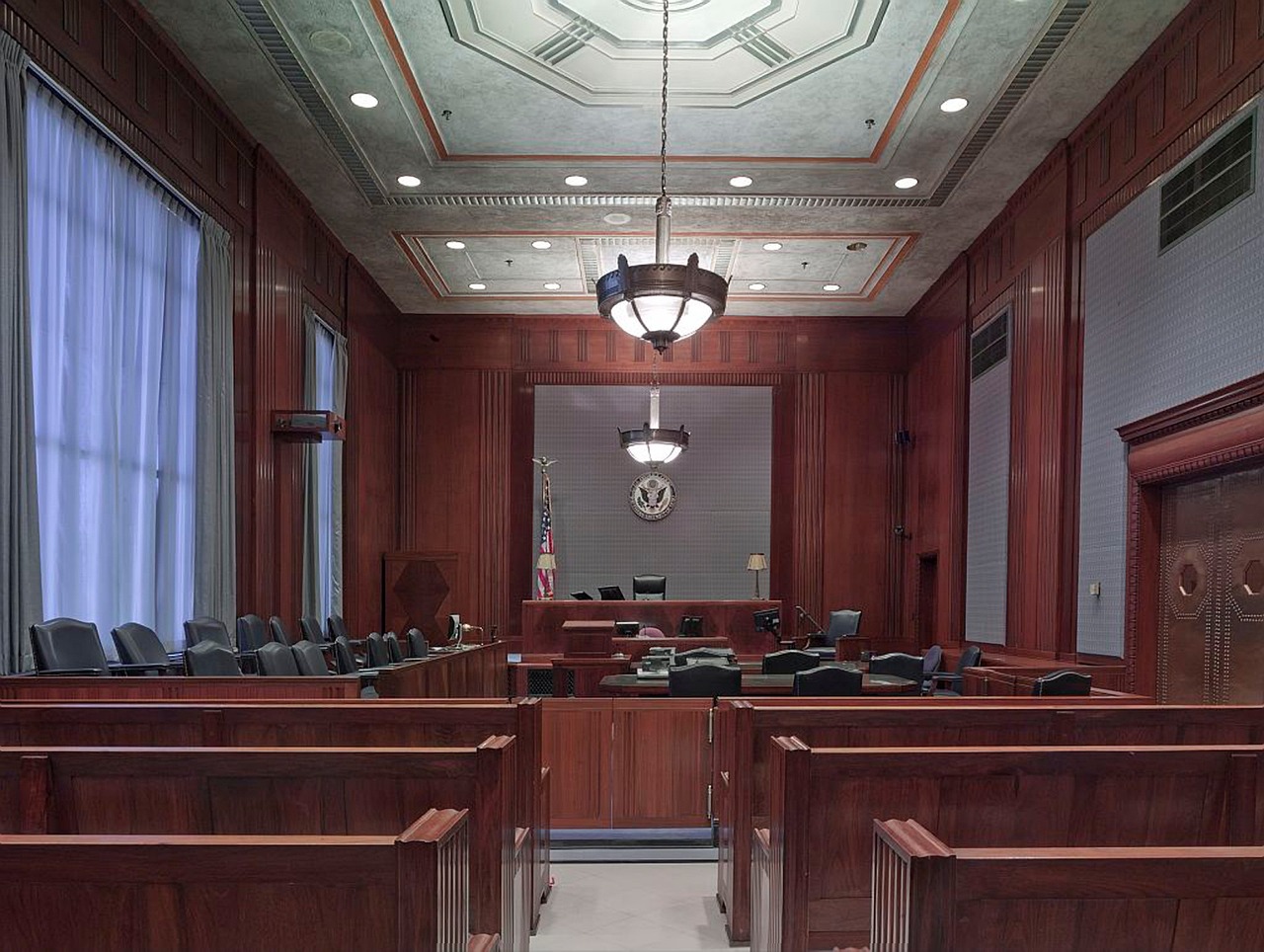
The lawsuit, Buist v. Anthropic PBC, alleges that these four major AI companies engaged in a horizontal agreement to slow the rate at which they improve their competing products, a violation of Section 1 of the Sherman Act. What makes this case particularly unusual is not just its audacity, but the fact that the alleged anticompetitive conduct was discussed, proposed, and seemingly accepted entirely in public view. There are no leaked emails, no confidential witnesses, and no smoking-gun meeting minutes. Instead, the plaintiffs point to a series of public statements from executives at the companies as evidence of an illegal cartel.
At the heart of the case lies a question that will define the next era of technology regulation: where does legitimate safety collaboration end and illegal market coordination begin?
The Public Trail of Evidence
Unlike typical cartel cases that rely on internal communications obtained through discovery or whistleblower testimony, this lawsuit builds its case entirely on public statements. The complaint treats an essay by Anthropic CEO Dario Amodei as the “offer” in a contractual sense, and subsequent statements from OpenAI CEO Sam Altman and others as “acceptance.”
In his essay, Amodei argued that coordinating on the pace of AI development would require an antitrust waiver from the government. He suggested that certain safety conversations among competitors would necessitate narrow legal exemptions to avoid running afoul of antitrust laws. Two days later, Altman publicly stated that OpenAI would not wait for such an exemption or legislation. The following day, OpenAI’s policy chief Chris Lehane confirmed that the company had already been working with Anthropic and Google DeepMind for several weeks on safety initiatives.
The plaintiffs frame this sequence as proof that the companies understood they were engaging in coordination and proceeded anyway despite recognizing the antitrust risk. This “consciousness of guilt” argument is central to the complaint’s theory: if the companies were asking whether their conduct was lawful, they must have understood it as potentially anticompetitive coordination.
Bloomberg Law first reported the filing, which seeks treble damages, an injunction, and a jury trial. The complaint’s reliance on public statements cuts both ways. On one hand, it makes the evidence extraordinarily easy to verify and transparent. On the other hand, it means the defendants can argue that conduct nobody tried to hide was never intended to be anticompetitive in the first place.
Synopsis
A new Northern District of California antitrust lawsuit alleges that Anthropic, OpenAI, SpaceXAI, and Google coordinated to slow the pace of AI development. The complaint treats limits on training, compute, and capability advancement as a possible output restriction, while the defendants may argue that the cited statements reflect lawful safety advocacy rather than a concrete commercial agreement. The case highlights the difficult boundary between legitimate AI safety collaboration and unlawful coordination among competitors.
What the Plaintiffs Allege Was Agreed Upon
The complaint alleges that the four AI companies agreed to a slower rate of capability advancement than each would choose independently in a competitive market. The mechanisms allegedly used to enforce this slowdown include limits on training compute and training runs, restrictions on using AI systems to improve other AI systems, and the implementation of capability checkpoints before advancing to new model generations.
Crucially, the plaintiffs point to the “embedded evaluator” proposal as the policing mechanism for this alleged agreement. They describe it as a form of verifiable pacing that would allow the companies to monitor each other’s compliance. Anthropic has already begun implementing this program with consulting firm Accenture, lending some real-world context to what might otherwise seem like a theoretical concern.
The plaintiffs claim to hold an 80 percent share of the US paid AI subscription market among the four defendants, though this figure is pleaded “on information and belief” and as a floor rather than a precise measurement. They also characterize the alleged restraint as “naked,” meaning it has no legitimate purpose other than restricting competition, which would make detailed market definition unnecessary under certain antitrust doctrines.
However, the four companies’ alleged “acceptances” of Amodei’s proposal were hardly uniform. Elon Musk’s response via SpaceXAI consisted of just four words on social media, while Google’s statement endorsed the general direction but left implementation details deliberately vague. This unevenness could prove to be a significant weakness in the plaintiffs’ case.
What the Complaint Does Not Say
Notably, the lawsuit does not allege that the AI companies’ safety concerns are fabricated or insincere. The plaintiffs’ argument is structural rather than personal: they contend that every stated safety objective can be pursued through unilateral action, independent third-party evaluators, or government regulation, without the need for competitor coordination.
The complaint explicitly disclaims any challenge to unilateral decisions by individual companies to slow their development, the use of independent evaluators, lawful safety research, compliance with government requirements, or petitioning Congress for regulatory changes or exemptions. In paragraph eleven, the plaintiffs even state that they take AI risk seriously and support independent safety investment and government oversight.
This narrow framing is deliberate. The legal argument rests on a fundamental principle of antitrust law: that competitors cannot decide among themselves that competition is too dangerous and therefore must be restrained. Under US antitrust doctrine, such judgments are reserved for Congress and regulatory agencies, not for market participants acting in concert.
As Nick Rowley, the lead attorney for the plaintiffs, stated to CBS News: “The antitrust laws do not permit competitors to decide among themselves that competition is too dangerous.” This framing positions the lawsuit not as anti-safety, but as pro-democracy and pro-accountability in how safety decisions are made.
Our Perspective
The strongest lesson is that AI safety and competition should be designed to reinforce each other, not treated as mutually exclusive. Companies should be free to slow their own systems, test dangerous capabilities, and advocate for regulation, but industry-wide restraints should be transparent, independently supervised, and grounded in public authority. Otherwise, the firms with the greatest commercial stake in reduced rivalry could end up making regulatory decisions without democratic accountability.
The Visible Weaknesses in the Case
Despite its dramatic framing, the complaint has several apparent vulnerabilities. Most significantly, the plaintiffs concede that the full effect of the alleged agreement on released products has not yet manifested. Nowhere in the twenty-nine-page filing is there a specific example of a slowed release, cancelled model, or altered training run that resulted from the alleged coordination.
This absence of concrete harm could prove fatal to the case. Antitrust plaintiffs typically must demonstrate actual injury resulting from anticompetitive conduct. While the plaintiffs argue they are being overcharged for products that improve more slowly than they would in a truly competitive market, proving this counterfactual will be challenging without specific examples.
Furthermore, the alleged “acceptances” by the different companies vary widely in their specificity and commitment level. A four-word social media post from Musk hardly constitutes a binding agreement to coordinate on product development timelines. Google’s endorsement of general principles while reserving implementation details similarly falls short of what antitrust law typically recognizes as an actionable agreement.
The plaintiffs also plead their market share estimate on “information and belief” rather than hard data, suggesting they lack access to the actual subscription numbers that would support their claim of market dominance. While they offer the “naked restraint” theory as an alternative that would make market definition unnecessary, courts are often reluctant to apply that doctrine without clear evidence of an agreement with no plausible justification.
Why This Was Foreseeable
The antitrust exposure facing these companies was not a surprise. Legal experts and industry observers had been discussing the potential antitrust implications of AI safety coordination for months before the lawsuit was filed. In July, a statement from employees across multiple AI labs acknowledged that each company faced “intense competitive pressure not to unilaterally slow” development, which the complaint now uses as evidence of both motive and action against economic self-interest.
In antitrust terms, an admission that unilateral restraint would be commercially irrational provides a clear explanation for why an agreement would be necessary. If slowing down individually would put a company at a competitive disadvantage, but slowing down collectively would not, that creates both the motive and the mechanism for anticompetitive coordination.
The commercial context surrounding the lawsuit is also significant. Several of these companies have been simultaneously warning about existential AI risks while racing toward public listings and explosive revenue growth. This tension between stated safety concerns and commercial imperatives raises questions about whether safety coordination is genuinely motivated by risk mitigation or serves as convenient cover for reducing competitive intensity.
Amodei himself identified the need for an antitrust waiver, demonstrating awareness that the type of coordination he was proposing could run afoul of competition law. The fact that the companies proceeded anyway, according to the complaint, suggests either a miscalculation of the legal risk or a decision that the benefits of coordination outweighed the potential legal exposure.
The International Dimension
The antitrust concerns raised by the lawsuit are not unique to American law. Article 101 of the European Union treaty prohibits agreements between undertakings that restrict competition and contains no safety exemption that companies can grant themselves. A coordinated pacing arrangement among frontier AI developers would face similar scrutiny in Brussels under EU competition law.
While no European case has been filed or signaled, the structural similarity between US and EU competition law means that the same conduct could potentially trigger enforcement action on both sides of the Atlantic. This convergence underscores that the tension between safety coordination and antitrust compliance is inherent to the legal frameworks governing competition, not an artifact of any particular jurisdiction’s approach.
Geopolitical factors further complicate the picture. Beijing characterized the AI slowdown proposal as a “Cold War script,” suggesting that Western coordination on AI development pace could be viewed as an attempt to maintain technological superiority over China. This leaves the AI companies caught between antitrust scrutiny domestically, potential enforcement in Europe, and geopolitical tensions that frame safety coordination as strategic competition.
Key Takeaways
- The lawsuit alleges coordinated restraint, not simply safety work — The plaintiffs claim four major AI companies agreed to slow capability improvements rather than making independent decisions.
- Public statements are central evidence — The complaint argues that executives proposed, accepted, and confirmed the alleged arrangement openly, although public advocacy does not automatically prove a binding agreement.
- The alleged restraint concerns innovation output — Limits on compute, training runs, or capability releases could reduce the speed and quality of improvements available to consumers.
- Safety is not an automatic antitrust defense — Companies may pursue independent testing, safeguards, and government-authorized coordination, but private competitors generally cannot create their own blanket exemption.
- The complaint has important evidentiary weaknesses — It does not yet identify a specific delayed model, canceled training run, or withheld capability caused by the alleged agreement.
- The case could shape AI governance — Its outcome may clarify how companies can collaborate on safety without replacing public regulation with private control over industry-wide development.
The Stakes for Innovation and Safety
The lawsuit raises fundamental questions about how AI safety should be governed in a competitive market. The plaintiffs’ perspective that competition and innovation must not be sacrificed in the name of privately negotiated safety agreements reflects a broader concern about regulatory capture and self-dealing by dominant firms.
Critics of the AI companies argue that allowing competitors to coordinate on development timelines, even under the guise of safety, creates a dangerous precedent. It effectively permits the largest players to slow the pace of innovation while maintaining their market positions, potentially freezing out smaller competitors and new entrants who might develop safer or more beneficial alternatives.
From this viewpoint, the proper venue for safety decisions is through democratic processes and regulatory oversight, not through backroom agreements among the very companies that stand to benefit from reduced competitive pressure. If AI development truly poses existential risks, the argument goes, then Congress should enact appropriate regulations after public debate and input from diverse stakeholders, not just the incumbent leaders.
On the other side, AI safety advocates worry that rigid application of antitrust principles could prevent essential coordination on risk assessment and mitigation. If companies cannot share information about dangerous capabilities or coordinate on evaluation protocols without facing treble damages, they may be forced to proceed independently, potentially missing critical risks that only emerge through collective analysis.
The challenge is that both concerns have merit. Competition is essential for innovation and consumer welfare, but coordination on legitimate safety matters may sometimes be necessary. The question is where to draw the line and who gets to draw it.
What Comes Next
As the case proceeds, several developments will be critical to watch. First, whether the working groups among the companies continue to meet will be seen as evidence of whether the alleged coordination is ongoing. The complaint alleges the groups were still meeting in mid-September, and any continuation would strengthen the plaintiffs’ case that the conduct is active rather than merely proposed.
Second, the defendants’ responses will be crucial. None of the companies has formally answered the complaint yet, and they have strong arguments available. They can contend that public advocacy for regulatory frameworks is constitutionally protected petitioning activity, that unilateral safety work is lawful regardless of what competitors do, and that sharing information with independent evaluators is not the same as coordinating on product development timelines.
Third, the discovery process, if the case survives a motion to dismiss, could reveal whether private communications tell a different story than the public statements. While the complaint relies entirely on public evidence, defendants may be forced to produce internal documents that either support or undermine the collusion theory.
Finally, the case may prompt legislative action. If Congress believes that AI safety coordination is both necessary and currently prohibited by antitrust law, it could enact a narrow exemption with appropriate safeguards. Alternatively, if regulators conclude that the existing antitrust framework is adequate and that companies should not be coordinating on competitive timelines, they might issue guidance making that clear.
A Defining Moment for AI Governance
The Buist v. Anthropic lawsuit represents a pivotal moment in the evolution of AI governance. It forces courts, regulators, and policymakers to confront the tension between safety collaboration and competitive markets at a time when both considerations are critical to the technology’s future.
The outcome will help define whether AI safety becomes primarily a matter of public regulation or private coordination, whether dominant companies can use safety concerns to justify reduced competitive intensity, and how innovation and risk mitigation can be balanced in one of the most consequential technology sectors of the 21st century.
For now, the lawsuit serves as a stark reminder that good intentions do not exempt companies from antitrust scrutiny, and that the legal framework governing competition does not contain implicit exceptions for industries that view themselves as special. Whether that framework is adequate for governing AI development, or whether new rules are needed, remains an open and urgent question.
What is clear is that the delicate balance between safety and innovation cannot be struck by the AI companies alone, acting in concert. That balance requires transparent public processes, democratic accountability, and regulatory frameworks that protect both competition and safety. The lawsuit may not provide all the answers, but it has certainly sharpened the questions.
Frequently Asked Questions
What is the antitrust lawsuit about?
What public statements form the basis of the alleged agreement?
What do the plaintiffs say the companies agreed to coordinate?
Why do the plaintiffs describe the alleged conduct as an output restriction?
Does the lawsuit claim that AI safety itself violates antitrust law?
What weaknesses could the lawsuit face?
Why might companies have been motivated to coordinate on development pace?
How could the case affect AI safety cooperation and regulation?
Sources
- Bloomberg Law — OpenAI, Anthropic, Google, SpaceXAI Hit With Antitrust Lawsuit
- CBS News — Lawsuit says Anthropic, OpenAI, SpaceXAI and Google agreed to slow AI development
- OpenAI — The AI policy window is open. We need to act.
- Communications of the ACM — AI Regulation in U.S. States: Lessons Learned and Key Takeaways
- Reuters — OpenAI taps Google in unprecedented cloud deal despite AI rivalry
- Brookings — With AI, we need both competition and safety
- Lawfare — How Antitrust Can Promote AI Safety Collaborations
- Federal Trade Commission — Partnerships Between Cloud Service Providers and AI